A woman in her 30s residing in Kannai presented with acute left-sided thoracic pain that began two days prior to her visit.
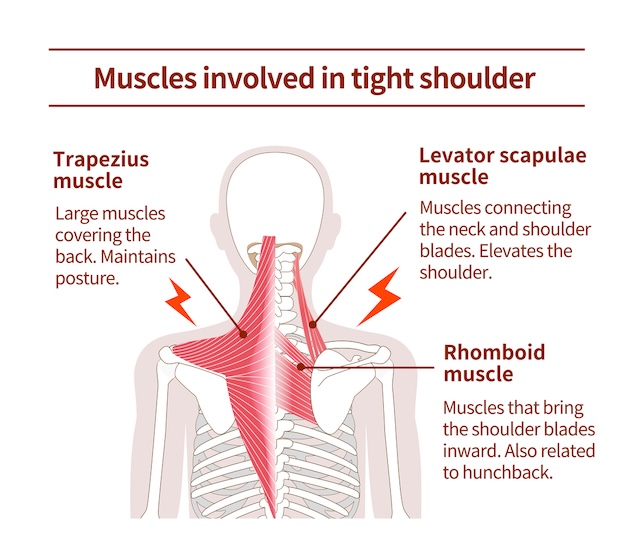
I had treated her before for an episode of acute low back pain, which responded very well to care. This time, she returned with what she described as a “locked” or strained upper back.
She works at a desk and had been feeling ongoing tightness and discomfort on the left side of her back. She noticed that rotating her shoulders after a bath would temporarily relieve the discomfort, so because work was busy, she decided to leave it alone.
Two days ago, while reaching out with her left hand to grab a frying pan after getting home, she suddenly felt a sharp “twinge” in her back. After that, even moving her neck triggered pain into the back, and she found it difficult to move normally.
The next morning, the pain was severe, and she struggled just to get out of bed.
She told me, “Last time you helped me so much with my low back pain. I felt it was more effective than just going to the hospital for patches, so I’d really like your help again.”
Because of her previous good response and the acute nature of the symptoms, I aimed for prompt intervention to achieve early improvement in this case.
[Initial Symptoms]
Interview:
She was unable to turn her head to the left. Any attempt to do so triggered excruciating pain around the scapular region due to an acute thoracic strain — commonly referred to in Japan as a “gikkuri back” (acute locked upper back).
As with her previous episode of acute low back pain, the sudden, sharp onset of pain created significant fear, preventing her from moving normally.
Visual Inspection:
Because of the discomfort in the left side of her back, her left shoulder was noticeably higher than the right.
Static Palpation:
The muscles around the left shoulder blade were highly tense, and this tension had spread to the shoulder area and neck.
Motion Palpation:
She was unable to turn her head to the left on her own due to pain. However, when she relaxed and the chiropractor gently moved her neck, a small amount of motion was possible.
Raising her left arm to the side caused no major problem, but when she lifted it forward, she felt discomfort along the inner edge of her shoulder blade.
Orthopedic Tests:
There were no specific positive findings on special tests relevant to this condition.
Muscle Strength Examination:
Special tests were not conducted due to acute pain.
[Initial Treatment Plan]
This case was mainly caused by muscle spasms in the levator scapulae (which connects the shoulder blade to the neck) and the rhomboid muscles (which connect the spine to the shoulder blade).
To correct the imbalance in muscle activation caused by the spasm, interferential electrical therapy was used while the patient gently repeated the movement that triggered pain. This helped restore proper muscle coordination.
After that, instrument-assisted myofascial release was performed to reduce adhesions in the fascia that had developed due to prolonged muscle tension.
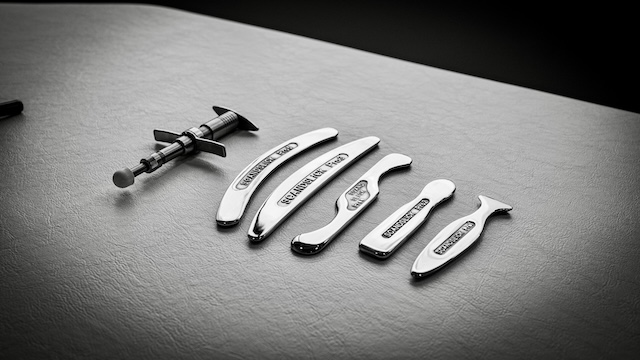
Assessment revealed segmental dysfunction at the C4–C5 level, which corresponds to the dorsal scapular nerve supplying the levator scapulae and rhomboid muscles.
Because this area was contributing to the ongoing muscle spasm, a precise chiropractic adjustment was delivered to the C4/C5 segment to address the root cause of the problem.
[Prognosis]
First Visit:
Right after the first treatment, she was visibly surprised by how much her neck mobility had improved. Although there was still slight discomfort at the very end range of motion, the overall range was dramatically better. The pain she previously felt when reaching with her left arm had almost completely disappeared.
For acute cases, I usually schedule one follow-up visit to confirm stable recovery. As many cases can be concluded at that stage, she agreed to return one week later for reassessment.
Second Visit:
Since her symptoms had resolved after the first session, the second visit focused on restoring overall musculoskeletal balance, including the lower back, to help prevent recurrence.
Treatment was concluded at this visit, and she was given guidance on preventive stretching exercises. She mentioned that she would come to my clinic first if any new problem occurred, which made this a very satisfying case.
[Practitioner’s Opinion]
A muscle spasm occurs when a muscle suddenly contracts involuntarily and does not relax. It is commonly referred to as a muscle cramp.
In this case, when the patient extended her left arm and the shoulder blade moved outward, the already tense muscles became acutely strained, triggering the painful episode.
Muscle spasms can be caused by overuse, sudden movements, poor posture, nerve irritation, stress, or reduced circulation. They commonly affect the neck, back, and lower back, often resulting in sharp pain and limited movement.
This reaction is considered a protective mechanism. When joints or nerves are overloaded, surrounding muscles tighten excessively to prevent further injury. However, prolonged or excessive contraction can disrupt normal muscle coordination and significantly interfere with daily activities.
With accurate assessment and appropriate treatment, most cases improve within one or two sessions.
That said, the root cause of recurring muscle tension is often related to lifestyle factors. Without changes such as regular exercise or improvements in posture and environment, symptoms may return.
Because maintaining optimal balance independently can be challenging, periodic maintenance care (for example, once a month) is often recommended to help prevent recurrence. However, some patients prefer to visit only when symptoms arise, as in this case.
At Spine Chiropractic, I provide evidence-based treatment for a wide range of musculoskeletal conditions, including acute back pain, neck pain, and thoracic strain, that directly impact daily life. This is not simply a relaxation service, but focused chiropractic care aimed at restoring function and reducing pain.
Spine Chiropractic is conveniently located in central Yokohama, just a one-minute walk from Bashamichi Station, eight minutes from Nihon-Odori Station, seven minutes from JR Kannai Station, and 12 minutes from JR Sakuragicho Station. The clinic is easily accessible for residents, office workers, and international patients seeking an English-speaking chiropractor in Yokohama.
If you are experiencing acute low back pain, neck stiffness, joint pain, or are looking for postpartum pelvic alignment care, please feel free to visit Spine Chiropractic. I am dedicated to delivering professional, patient-centered chiropractic care with integrity and clinical expertise.