A woman in her 30s working in Kannai presented with right shoulder pain and left lower back pain.
A female patient engaged in desk-based work presented to my clinic with left-sided lower back pain and right shoulder pain that had developed one month prior.
She had been experiencing chronic shoulder stiffness and lower back discomfort since starting her job approximately 5–6 years ago. To manage these symptoms, she had been receiving massage therapy around once every two weeks and had also started strength training at the gym, which had helped her symptoms last longer between treatments.
However, over the past month, her symptoms progressed from stiffness to pain, and the effects of massage therapy no longer provided sustained relief. Seeking a more fundamental solution, she searched for chiropractic or manual therapy options in the Kannai/Bashamichi area and found my clinic recommended. After reviewing our website, she decided to visit.
[Initial Symptoms]
Interview:
The patient had a history of chronic symptoms, including episodes of acute lower back pain, and at times experienced headaches associated with severe shoulder stiffness.
During the consultation, it was revealed that she had been diagnosed with mild scoliosis during her school years. As it had not caused any significant issues in her daily life, she had largely forgotten about it.
After starting her career and engaging in desk-based work, her symptoms gradually became chronic. She typically experienced discomfort in specific areas and had been managing it with regular massage therapy for temporary relief, as well as exercise at the gym. However, over the past month, her pain had intensified, and massage therapy no longer provided effective relief. Additionally, gym exercise seemed to aggravate her symptoms, leaving her uncertain about how to manage the condition.
As a result, she decided to seek chiropractic care for the first time and visited our clinic.
Additional note: During the initial assessment, postural observation suggested the possibility of scoliosis. Upon inquiry, the patient recalled that she had indeed been diagnosed with the condition during junior high school.
Visual Inspection:
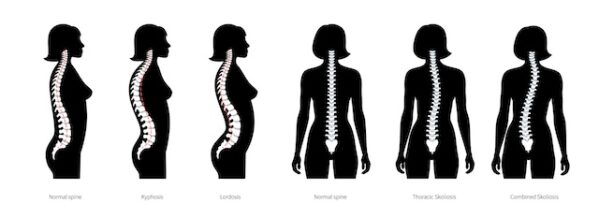
Given the suspicion of mild scoliosis, an observational assessment was conducted using key indicators such as acromial height, scapular symmetry, and pelvic alignment.
Findings included elevation of the right shoulder, lateral displacement (abduction) of the right scapula, and left lateral shift of the pelvis.
Static Palpation:
Hypertonicity of the right shoulder elevator and abductor muscle groups, including the trapezius, levator scapulae, sternocleidomastoid, supraspinatus/infraspinatus, and serratus anterior.
Hypertonicity of the left peri-pelvic musculature, including the lumbar erector spinae, gluteal muscles, obliques/transversus abdominis, and tensor fasciae latae.
Motion Palpation:
- A mild left rib hump was observed during forward flexion.
- Marked elevation of the shoulder was noted when raising the right arm.
- In standing, lateral flexion of the trunk was noticeably easier to the right side.
Orthopedic Tests:
No specific diagnostic tests for confirming scoliosis were performed, as there are no definitive screening tests for suspected scoliosis in this case.
Muscle Strength Examination:
Deltoid: Left 4/5 — slightly weaker compared to the right
Latissimus dorsi: Right 4/5 — slightly weaker compared to the left
Serratus anterior: Left 4/5 — slightly weaker compared to the right
Gluteus medius/minimus: Left 4/5 — slightly weaker compared to the right
Tensor fasciae latae: Right 4/5 — slightly weaker compared to the left
[Initial Treatment Plan]
Postural assessment revealed right shoulder elevation and left lateral tilt of the lumbar spine and pelvis, which corresponded with marked asymmetry observed during manual muscle testing.
Initial management focused on restoring muscle tone balance by reducing hypertonicity in overactive muscle groups and providing targeted strengthening exercises for weakened muscles.
Although symptom relief was achieved through normalization of muscle condition alone, maintaining this improvement requires correction of underlying structural imbalance through chiropractic adjustments.
To achieve this, it is necessary to determine the appropriate direction of correction for segmental joint restrictions. In this case, the patient presented with a scoliotic pattern characterized by right convexity in the thoracic spine and left convexity in the lumbar spine.
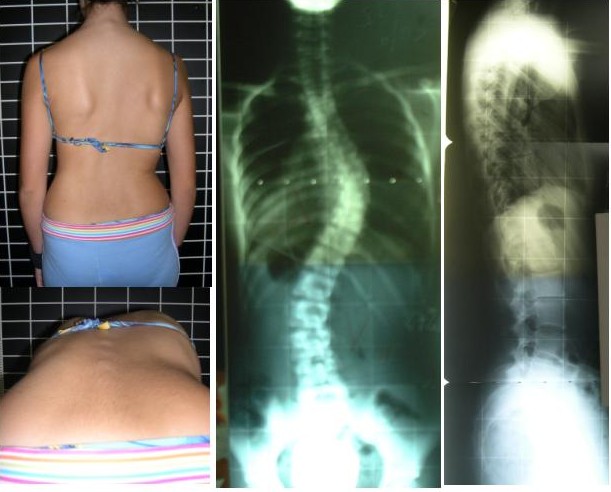
Note: The images are not of the actual patient.
Creator:Rigo M, Negrini S, Weiss HR, Grivas TB, Maruyama T, Kotwicki T
Source:Rigo M, Negrini S, Weiss HR, Grivas TB, Maruyama T, Kotwicki T; SOSORT. Scoliosis 2006, 1:11. PMID 16857045. doi:10.1186/1748-7161-1-11.
This spinal curvature contributed to significant imbalance in muscle tension, as well as asymmetry in joint mobility, leading to uneven mechanical loading on the body.
By reducing muscular tension and applying chiropractic adjustments in the appropriate direction, the goal is to restore the body’s central axis and create a state less prone to symptom recurrence.
[Prognosis]
Initial Visit:
Muscle relaxation techniques were applied to reduce right shoulder tension and left-sided lower back pain. This was followed by full-spine chiropractic adjustments to improve joint mobility and optimize spinal alignment.
Second Visit:
The patient returned one week later. Symptoms had improved for approximately three days but then gradually returned, which had been anticipated and explained in advance.
The same treatment approach was applied. It was reiterated that the body requires time to adapt to and retain post-treatment changes. During this period, targeted strengthening exercises were prescribed for the weaker muscle groups.
Visits 3–6:
Treatment was provided once every 1–2 weeks, with progress monitored over time.
The core treatment approach remained consistent, focusing on spinal adjustments and muscle relaxation to restore both functional and structural balance.
Additionally, the patient began attending Pilates sessions at a partner studio (https://kulapilates.com/), where exercises were coordinated based on my clinical recommendations. This focus on core muscle training is considered to have contributed positively to the outcome.
Over the course of two weeks, even during periods of increased work demands, the patient reported little to no recurrence of symptoms.
From the 7th Visit Onward:
The patient has transitioned to a maintenance phase. Chiropractic adjustments are now performed once per month, alongside continued Pilates practice, supporting an overall healthy and active lifestyle.
[Practitioner’s Opinion]
Chronic shoulder and lower back pain are often associated with the cumulative effects of daily physical stress. Factors such as lack of exercise, occupational demands, and living environment can contribute, making these conditions common across a wide population.
In this case, however, an underlying issue was identified in the form of scoliosis — a functional abnormality of the spine (clinically considered functional scoliosis).
For this reason, the need for ongoing maintenance care was explained from the initial visit, with the understanding that recurrence was likely without proper management.
In mild cases, depending on the degree of curvature, scoliosis itself is often asymptomatic. Particularly at a younger age, individuals may not notice any symptoms. However, as with individuals who have structurally normal spines, the likelihood of developing chronic symptoms increases with age and environmental factors such as occupational demands.
While chiropractic adjustments and massage therapy are effective in relieving symptoms, maintaining these improvements requires active participation and effort on the part of the patient.
From this perspective, Spine Chiropractic collaborates with Pilates studios and fitness facilities to support long-term outcomes.
In this case, the patient began attending Pilates following treatment, which helped prevent recurrence of symptoms and allowed her to maintain a healthy, pain-free lifestyle. This case has been presented as a positive example of successful long-term management.
At Spine Chiropractic, I provide evidence-based treatment for a wide range of musculoskeletal conditions, including acute back pain, neck pain, and thoracic strain, that directly impact daily life. This is not simply a relaxation service, but focused chiropractic care aimed at restoring function and reducing pain.
Spine Chiropractic is conveniently located in central Yokohama, just a one-minute walk from Bashamichi Station, eight minutes from Nihon-Odori Station, seven minutes from JR Kannai Station, and 12 minutes from JR Sakuragicho Station. The clinic is easily accessible for residents, office workers, and international patients seeking an English-speaking chiropractor in Yokohama.
If you are experiencing acute low back pain, neck stiffness, joint pain, or are looking for postpartum pelvic alignment care, please feel free to visit Spine Chiropractic. I am dedicated to delivering professional, patient-centered chiropractic care with integrity and clinical expertise.