A woman in her 30s residing in Kannai presented with acute left-sided thoracic pain that began two days prior to her visit.
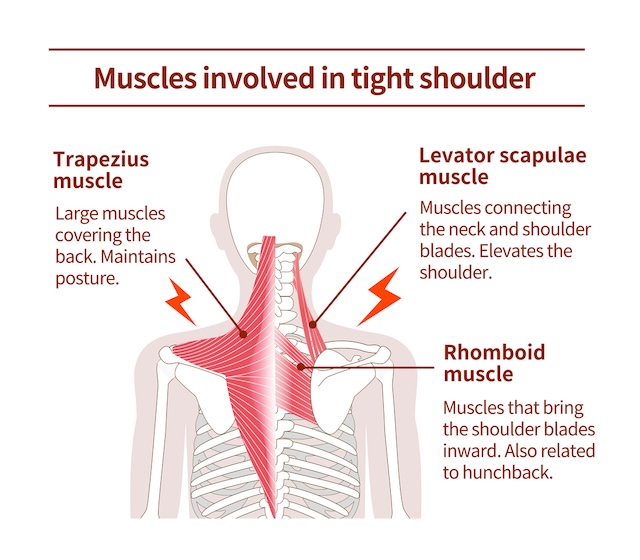
The patient visited my clinic with sudden, severe pain around the left side of her upper back, which had started two days earlier.
I had previously treated her for an episode of acute low back pain, and she had experienced significant improvement following chiropractic care. This time, she returned with what she described as a sudden, locked sensation in her upper back.
She works at a desk and had been experiencing persistent tightness and discomfort on the left side of her back for some time. She noticed that rotating her shoulders after taking a bath temporarily relieved the discomfort. However, because she had been busy with work, she had continued her usual routine without seeking treatment.
Two days before visiting my clinic, she was preparing dinner after returning home. When she reached forward with her left hand to pick up a frying pan, she suddenly felt a sharp pain around her left shoulder blade.
After this incident, even moving her neck triggered pain around the upper back, making normal movement difficult.
The following morning, the pain remained severe, and she struggled to get out of bed.
Having experienced improvement with my previous treatment for low back pain, she decided to visit my clinic again.
Initial Examination
Medical Interview
The patient was unable to turn her head to the left. Attempting this movement triggered severe pain around the left scapular region.
The sudden onset of sharp pain had also caused considerable apprehension about movement. As a result, she was avoiding normal neck and upper-body movements.
Visual Inspection
Her left shoulder was noticeably elevated compared with the right, possibly reflecting protective positioning associated with the discomfort around her left upper back.
Static Palpation
Significant muscle tension was identified around the left shoulder blade. The increased tension extended into the surrounding shoulder and cervical muscles.
Motion Palpation
The patient was unable to actively rotate her neck to the left because of pain. However, when she relaxed and I gently moved her neck passively, a limited range of motion was possible.
No significant difficulty was observed when she raised her left arm to the side. However, reaching forward with the left arm reproduced discomfort along the medial border of the shoulder blade.
Orthopedic Tests
No specific positive findings were identified on the orthopedic tests considered relevant to her presentation.
Muscle Strength Examination
A formal muscle strength examination was not performed because of the severity of her acute pain.
Initial Treatment and Chiropractic Approach
The examination revealed marked tension in the left levator scapulae and rhomboid muscles. These muscles play important roles in controlling scapular position and movement, as well as coordinating movement between the neck and shoulder blade.
Their increased tension may have contributed to the patient’s pain and restricted movement, particularly during left cervical rotation and forward reaching.
I initially used interferential current therapy to address the painful muscle tension. During the treatment, the patient gently repeated the movement that had previously triggered her symptoms, within a tolerable range. This allowed me to monitor her response while gradually reintroducing the movement.
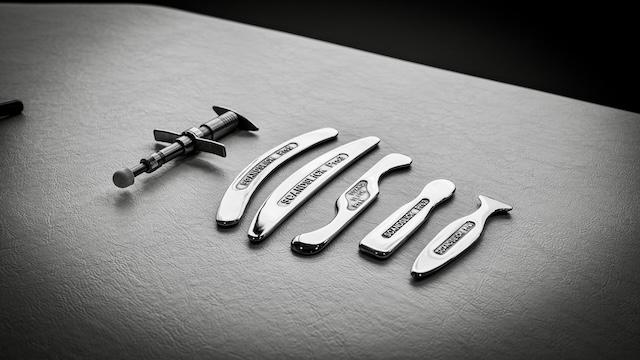
I then performed instrument-assisted myofascial treatment around the shoulder blade and cervical region to address the increased soft-tissue tension.
Assessment of the Related Nerve Supply and Spinal Segments
My chiropractic approach does not focus exclusively on the muscles where pain or excessive tension is observed. I also consider the nerve supply to those muscles and the function of the spinal segments associated with that nerve supply.
In this case, particular attention was given to the levator scapulae and rhomboid muscles, which are associated with the dorsal scapular nerve.
The dorsal scapular nerve arises primarily from the C5 nerve root and supplies the rhomboid muscles and, in many individuals, part of the levator scapulae.
From a chiropractic perspective, dysfunction involving the spinal segments associated with the nerve supply to affected muscles may be relevant when assessing abnormal muscle tension and spasm. Therefore, I consider it important to assess not only the local muscles but also the related neural distribution and spinal segmental function.
In this patient, I assessed the functional status of the cervical segments associated with the dorsal scapular nerve, including the C4–C5 region. Based on the clinical assessment, I performed a chiropractic adjustment targeting the C4 and C5 segments, alongside the local soft-tissue treatment.
The aim was to address both the local muscular dysfunction and the related spinal segmental function as part of a comprehensive chiropractic approach.
Treatment Progress and Outcome
First Visit
Immediately after the initial treatment, the patient experienced a noticeable improvement in neck mobility.
Before treatment, she had been almost unable to rotate her head to the left. Following treatment, she could turn her neck considerably further. Although slight discomfort remained at the end of her available range of motion, her overall movement had improved substantially.
The pain she had previously experienced when reaching forward with her left arm had also almost completely disappeared.
For acute musculoskeletal presentations, I consider reassessment important to confirm that the improvement is maintained and that no significant symptoms remain. I therefore arranged a follow-up appointment approximately one week later.
Second Visit
By the time of her second visit, the symptoms that had brought her to the clinic had resolved.
As the acute symptoms had settled, I assessed her overall musculoskeletal function, including the lower back, and provided additional treatment where appropriate.
I also advised her on simple stretching exercises that she could incorporate into her daily routine.
Treatment was concluded at this visit. She mentioned that she would contact my clinic first if she experienced another musculoskeletal problem in the future.
Practitioner’s Opinion
This case involved sudden, severe pain around the left shoulder blade following a reaching movement with the left arm.
The patient had already been experiencing persistent tightness in the left upper back before the acute episode. During the examination, significant tension was identified in the levator scapulae and rhomboid muscles, which are important for scapular positioning and movement.
These findings suggest that the surrounding muscular dysfunction may have contributed to the patient’s pain and restricted cervical movement. However, it is important to recognize that acute upper back pain can involve multiple structures, and muscle tension alone does not necessarily explain every symptom.
Understanding Muscle Spasm from a Chiropractic Perspective
A muscle spasm is an involuntary contraction or excessive activation of a muscle. It can occur in association with sudden movements, repetitive loading, fatigue, sustained postures, or irritation involving the nervous system.
In this case, the patient had experienced ongoing tightness in the left upper back, potentially associated with prolonged desk work and sustained postural loading. When she reached forward with her left arm, the movement may have placed additional demand on the already tense muscles around the shoulder blade, triggering the acute painful episode.
From a chiropractic perspective, I believe it is important to look beyond the symptomatic muscle itself.
When abnormal muscle tension or spasm is present, I assess not only the affected muscle but also its nerve supply and the function of the spinal segments associated with that neural distribution.
For example, the rhomboid muscles and part of the levator scapulae receive innervation from the dorsal scapular nerve, which arises primarily from the C5 nerve root. For this reason, when dysfunction is identified in these muscles, I also consider the functional status of the related cervical spinal segments.
Within the chiropractic framework, dysfunction of these associated spinal segments may be considered a contributing factor to abnormal neuromuscular function. This is one reason why my assessment may extend beyond the painful area to include the relevant spinal segments and their associated nerve supply.
In this case, I combined local treatment of the affected muscles with chiropractic adjustments targeting the related cervical segments.
It is important to distinguish this clinical approach from a proven direct causal relationship. The findings in this individual case do not establish that cervical segmental dysfunction was the sole or underlying cause of the muscle spasm. Rather, assessing the local muscles, their nerve supply, and the associated spinal segments represents an important part of my chiropractic clinical reasoning.
Following the initial treatment, the patient experienced a substantial improvement in neck mobility and reaching movements. By the second visit, her original symptoms had resolved.
Although the improvement was encouraging, the outcome of an individual case cannot establish which specific treatment component was responsible for the change.
For patients experiencing sudden upper back pain, appropriate assessment is important to determine whether the symptoms are consistent with a musculoskeletal condition or whether further medical investigation is required. Persistent or worsening pain, unexplained fever, chest symptoms, significant numbness, or muscle weakness should be medically evaluated.
Maintaining comfortable movement, incorporating regular physical activity, and reviewing prolonged working postures may also help reduce unnecessary physical stress during daily activities.
Chiropractic Care for Acute Upper Back Pain in Yokohama
At Spine Chiropractic, I provide evidence-based chiropractic care for a range of musculoskeletal conditions, including acute upper back pain, neck pain, acute low back pain, and shoulder discomfort.
My approach is not simply focused on temporary relaxation. I assess the patient’s symptoms, movement patterns, muscle function, and relevant spinal segmental function to develop an appropriate treatment plan aimed at reducing pain and improving daily function.
If you are experiencing sudden upper back pain, pain around the shoulder blade, or difficulty turning your neck, an appropriate assessment can help identify the factors that may be contributing to your symptoms.
My clinic, Spine Chiropractic, is located in central Yokohama, just a one-minute walk from Bashamichi Station. It is also accessible from JR Kannai Station (7 minutes), Nihon-Odori Station (8 minutes), and JR Sakuragicho Station (12 minutes).
I provide chiropractic care in both English and Japanese.
If you are looking for an English-speaking chiropractor in Yokohama or are experiencing acute upper back pain, neck stiffness, or shoulder blade pain, please feel free to contact Spine Chiropractic.