A man in his 40s who worked in the Kannai area of Yokohama visited my clinic, Spine Chiropractic, with worsening lower back pain and numbness radiating from his right buttock down his leg.
He had a long history of chronic lower back pain, but his symptoms had become significantly worse approximately three months earlier. Around that time, he began experiencing numbness extending from his right buttock into his right leg.
The symptoms gradually intensified when he remained seated for extended periods at work, making it difficult for him to concentrate. His pain was particularly severe in the morning, and getting out of bed had become increasingly difficult.
An MRI scan at an orthopedic clinic revealed lumbar disc herniations at the L4–L5 and L5–S1 levels.
He had been receiving medical treatment for approximately three months, including oral pain medication and regular nerve root block injections. Although the injections initially provided significant relief, the pain gradually returned as their effects wore off.
When he asked his physician about further treatment options, surgery was recommended. However, he did not wish to undergo surgery at that stage and wanted to explore other options.
While researching alternative approaches, he came across chiropractic care and found my clinic near his workplace. He subsequently decided to visit Spine Chiropractic in Yokohama.
Initial Examination
Medical Interview
It had been some time since his last nerve root block injection, and he was already experiencing pain while sitting during the consultation.
His main symptoms were pain around the right lower back and buttock, accompanied by numbness extending into the back of his right thigh.
Bending forward aggravated his symptoms, making everyday activities such as putting on underwear, getting dressed, and putting on shoes particularly difficult.
He also had to move carefully when standing up from a chair.
Prolonged sitting was one of his main triggers, as it gradually increased the numbness in his right buttock and leg.
Visual Inspection
During both sitting and standing, he adopted a posture in which he appeared to slightly lift or unload his right side.
This may have represented a compensatory posture to avoid placing excessive pressure on the painful area.
Static Palpation
Increased muscle tension was noted in the right gluteal muscles and hamstrings.
Changes in the palpable position and mobility of the L4–L5 region and sacrum were also observed.
These findings were considered alongside his symptoms and movement patterns when assessing the lumbar and pelvic regions.
Motion Palpation
When seated, right trunk rotation and right lateral bending reproduced pain and numbness extending from the buttock into the leg.
Similar symptoms were observed during these movements in the standing position, although the numbness was less pronounced than when he was seated.
The right hemipelvis also appeared to have a posterior rotational position. When I gently supported this area, he reported a temporary reduction in lower back and buttock discomfort.
Orthopedic Tests
Straight Leg Raise Test (SLR): Positive
Raising the right leg while the patient was lying supine reproduced an increase in numbness in the right leg.
Double Leg Raise Test (DLR): Positive
Raising both legs simultaneously reproduced pain in the lower back and gluteal region, along with increased leg numbness.
Well Leg Raise Test (WLR): Negative
Raising the unaffected left leg and dorsiflexing the ankle did not reproduce pain or numbness in the right leg.
Kemp’s Test: Positive
Trunk rotation and lateral bending in the seated position reproduced pain and numbness extending from the buttock into the leg.
These findings were consistent with possible lumbar nerve root involvement. Combined with the MRI findings, they supported the clinical picture of lumbar disc herniation with associated radiating leg symptoms.
However, orthopedic tests alone cannot determine the exact extent of nerve involvement or establish the severity of a disc herniation.
Muscle Strength Examination
A detailed muscle strength examination was not performed during the initial assessment.
Given the patient’s radiating pain and numbness, a neurological examination, including lower-limb muscle strength, sensation, and reflexes, is important for assessing possible nerve involvement and monitoring changes over time.
Initial Treatment
The patient presented with significant lower back pain and radiating symptoms into the right buttock and leg. With the MRI-confirmed disc herniations and clinical findings suggesting nerve root involvement, I considered it important to avoid aggravating his symptoms during treatment.
He was able to lie comfortably in a prone position, so I began treatment in that position.
During the initial session, I avoided spinal joint adjustments and focused on soft-tissue treatment around the lumbar and pelvic regions.
The treatment included:
- Graston Technique applied to the soft tissues along the right sciatic nerve pathway
- Psoas muscle release in the supine position
- Myofascial release of the gluteus medius and gluteus minimus
I adjusted the treatment intensity according to his comfort and symptom response.
The aim was to address the surrounding soft tissues without unnecessarily provoking his existing symptoms. I arranged a follow-up appointment four days later to reassess his response.
Treatment Progress
Second Visit (Four Days Later)
The patient reported that his symptoms had temporarily increased the day after the first treatment but had subsequently settled.
Overall, however, he did not notice any significant improvement.
I reassessed his symptoms and continued with soft-tissue treatment around the gluteal and hip regions, adjusting the approach according to his response.
I also introduced ultrasound therapy at the end of the session.
Third Visit (Three Days Later)
He visited my clinic after work and reported that his lower back and buttock symptoms had become more noticeable during the day.
However, unlike after the first session, he did not experience the same degree of symptom aggravation the following day.
Muscle tension around the lumbar region remained elevated, so I continued with soft-tissue treatment.
I also introduced gentle spinal mobilization based on my clinic’s Joint Motion Theory, while avoiding direct loading of the affected lower lumbar segments.
Fourth Visit (One Week Later)
As he had reported some improvement following the previous session, I extended the interval between appointments to one week.
However, he reported that his symptoms had started to intensify again around the fourth day after treatment.
Despite this temporary increase, his symptoms were still less severe than they had been at the initial consultation. The pronounced post-treatment flare-ups experienced earlier were also no longer present.
I decided to continue monitoring his response and maintain a similar treatment approach, initially at approximately weekly intervals.
Fifth to Seventh Visits (One- to Two-Week Intervals)
As his symptoms gradually changed, I expanded the treatment approach.
During this period, I assessed and treated the upper lumbar spine and right sacroiliac joint region, while remaining mindful of the disc herniations identified at L4–L5 and L5–S1.
I focused on improving spinal and pelvic mobility within a comfortable range and considered how movement restrictions in surrounding regions might influence overall mechanical loading.
Treatment intensity and the areas addressed were adjusted according to his symptoms and response at each visit.
Eighth Visit (Two Weeks Later)
By the eighth visit, the frequency of symptom aggravation had decreased significantly compared with his initial presentation.
He reported that symptoms now occurred only occasionally, mainly after prolonged periods of sitting.
He also stated that he was no longer taking pain medication.
By September 2025, his condition had become sufficiently stable for me to conclude the intensive treatment phase and transition to maintenance care based on his ongoing needs.
Practitioner’s Opinion
This case involved chronic lower back pain accompanied by numbness radiating from the right buttock into the leg.
An important feature was the aggravation of symptoms during prolonged sitting, together with the reproduction of leg symptoms during several orthopedic tests.
MRI findings confirmed disc herniations at L4–L5 and L5–S1. When considered alongside his clinical presentation, these findings were consistent with lumbar disc herniation accompanied by radiating leg symptoms.
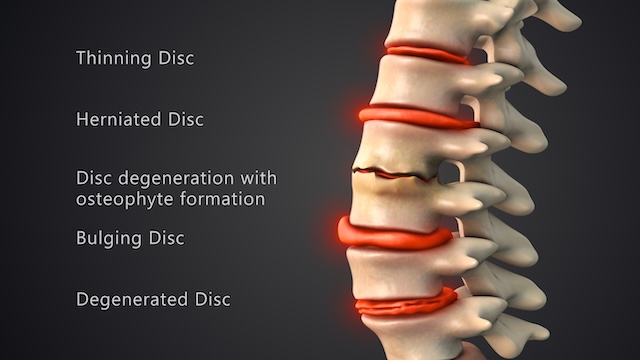
Lumbar disc herniation occurs when material from an intervertebral disc protrudes beyond its normal boundaries. Depending on its location and the surrounding structures, it may irritate or compress a nearby nerve root, potentially causing lower back pain, buttock pain, and symptoms extending into the leg.
However, it is important to understand that MRI findings do not always correspond directly to the severity of a person’s symptoms. Some people have disc herniations without experiencing significant pain, while others experience substantial symptoms. Clinical findings and neurological assessments must therefore be considered alongside imaging results.
In this case, prolonged sitting was a particularly significant aggravating factor. His symptoms interfered with his ability to work comfortably and affected basic daily activities, including getting dressed and putting on shoes.
My initial priority was to avoid aggravating his symptoms while addressing the surrounding soft tissues and assessing his movement patterns.
As treatment progressed, I gradually expanded the areas assessed to include the lumbar spine and pelvis. I continued to monitor his response and adjust the approach according to his symptoms.
Over the course of eight visits, he reported a substantial reduction in the frequency of pain and numbness. He was eventually able to manage his daily activities without taking pain medication.
However, this improvement does not establish that any single treatment technique directly caused the outcome. The natural course of the condition, changes in activity, and the combined effects of different interventions may all have contributed.
One important point is that a patient with MRI-confirmed disc herniation and radiating leg symptoms requires careful assessment. Chiropractic care should not replace appropriate medical management, particularly when neurological symptoms are present.
Progressive muscle weakness, new or worsening numbness around the groin or saddle area, or changes in bladder or bowel function require urgent medical assessment. These symptoms may indicate serious nerve compression and should not be managed with chiropractic treatment alone.
Lumbar Disc Herniation and Sciatica Treatment in Yokohama
If you are experiencing lower back pain accompanied by buttock pain, leg numbness, or symptoms that worsen when sitting, it is important to have your condition properly assessed.
At Spine Chiropractic, I evaluate not only the area where you experience pain but also the movement and function of the lumbar spine, pelvis, and surrounding joints and muscles.
My goal is not simply to provide temporary symptom relief, but to assess the factors contributing to your symptoms, improve movement where appropriate, and provide individualized chiropractic care based on your condition.
You may benefit from an assessment if you experience:
- Lower back pain accompanied by numbness in one leg
- Pain or numbness extending from the buttock into the thigh or lower leg
- Leg numbness that becomes worse after prolonged sitting
- Lower back pain when bending forward or putting on shoes
- Persistent sciatica-like symptoms
- MRI-confirmed lumbar disc herniation at L4–L5 or L5–S1
- Lower back pain that interferes with work or everyday activities
My clinic, Spine Chiropractic, is located in Yokohama’s Naka Ward, just 1 minute from Bashamichi Station, 7 minutes from JR Kannai Station, 8 minutes from Nihon-Odori Station, and 12 minutes from JR Sakuragicho Station.
I welcome both local residents and international patients, providing chiropractic care in English and Japanese.
If you are looking for a chiropractor in Yokohama for lower back pain, lumbar disc herniation, sciatica, or leg numbness, I provide individualized assessments and care based on your symptoms, examination findings, and medical history.
My clinic is conveniently accessible from Minato Mirai, Bashamichi, Kannai, Sakuragicho, and Nihon-Odori.
Individual treatment outcomes vary. Chiropractic care is not a substitute for medical diagnosis or treatment. New or progressive neurological symptoms, particularly changes in bladder or bowel function or numbness around the groin, require urgent medical assessment. joint pain, or are looking for postpartum pelvic alignment care, please feel free to visit Spine Chiropractic. I am dedicated to delivering professional, patient-centered chiropractic care with integrity and clinical expertise.