A man in his 40s living in Minato Mirai, Yokohama, visited my clinic, Spine Chiropractic, with persistent pain on the inside of his right elbow.
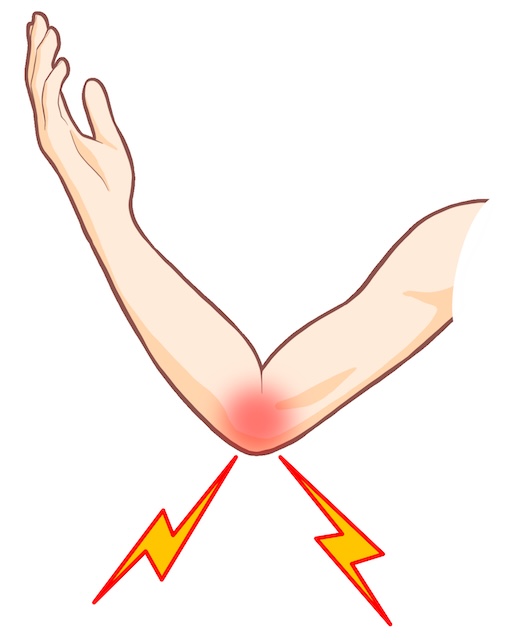
His symptoms had been bothering him for approximately six months and became worse whenever he played golf.
About six months earlier, he had participated in a golf competition. After the event, he began experiencing pain around the inner side of his right elbow.
Whenever he practiced golf, the pain worsened, so he consulted an orthopedic clinic and was diagnosed with golfer’s elbow, also known as medial epicondylitis.
He was prescribed pain medication and anti-inflammatory patches. During subsequent visits, he was advised to perform stretching exercises. When his symptoms did not improve sufficiently, a steroid injection was recommended.
The injection temporarily relieved his pain. However, when he returned to playing golf, the symptoms recurred, leading to a cycle of repeated injections and recurring pain.
He began wondering whether there was another way to address the problem while continuing to enjoy golf. As my clinic is conveniently located near his home in Minato Mirai, he decided to seek additional care at Spine Chiropractic in Yokohama.
Initial Examination
Medical Interview
In addition to pain during golf, he occasionally experienced discomfort in his right elbow during everyday activities that required him to exert force through his arm.
Examples included lifting objects and pushing through his arms when getting up from a chair.
Golf was the most significant trigger. When he practiced at the driving range or played a round, the pain made it difficult for him to swing with his usual strength.
Visual Inspection
No obvious abnormalities were observed around the right elbow.
Static Palpation
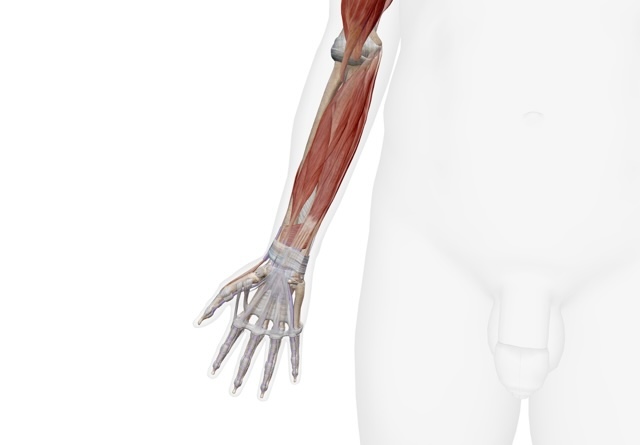
Compared with the left side, increased muscle tension was noted in the muscle group attached to the medial epicondyle of the right elbow.
The muscles included:
- Pronator teres
- Flexor carpi radialis
- Palmaris longus
- Flexor digitorum superficialis
These muscles contribute to forearm rotation and wrist and finger movements. Their tendons attach around the medial side of the elbow, an area commonly involved in golfer’s elbow.
Motion Palpation
No remarkable restrictions were observed during the assessment of elbow movement.
However, discomfort was reproduced around the medial epicondyle of the right elbow when the forearm was moved into supination.
Orthopedic Tests
Golfer’s Elbow Test: Positive
The test reproduced pain around the medial epicondyle of the right elbow, consistent with the patient’s reported symptoms.
Muscle Strength Examination
The muscles attached to the medial side of the elbow were assessed.
The patient had difficulty generating normal force because of pain. Therefore, his strength appeared reduced during testing, although pain limited the assessment of his actual muscle strength.
Initial Treatment
The examination findings, including localized tenderness around the medial epicondyle, increased tension in the forearm flexor-pronator muscles, and a positive Golfer’s Elbow Test, were consistent with symptoms commonly associated with golfer’s elbow (medial epicondylitis).
Because his pain repeatedly returned when he played golf, I wanted to determine how much improvement could be achieved by addressing the elbow itself before expanding the assessment to other areas.
Practitioner’s Opinion
This case presented with findings consistent with golfer’s elbow, including pain on the medial side of the right elbow, increased tension in the forearm flexor-pronator muscles, pain during orthopedic testing, and difficulty generating normal force because of pain.
One particularly notable aspect of this case was the difference between his response to local treatment and his response after I broadened the assessment to include the rest of his body.
Initially, I focused on the elbow and surrounding structures. His pain during everyday activities gradually improved, but golf continued to reproduce the symptoms and limit his swing.
Because the improvement had plateaued, I considered whether the mechanics of his golf swing and the movement of other body regions might be contributing to the continued stress on his elbow.
A golf swing involves coordinated movement of the feet, ankles, knees, hips, pelvis, spine, shoulders, arms, and wrists. The elbow is only one part of this coordinated movement.
I therefore expanded my assessment to include the lumbar spine, pelvis, knees, and ankles, with the aim of understanding how his body was moving during the swing and how the resulting forces might be distributed.
After this broader approach was introduced, he reported a substantial reduction in pain during golf.
However, this sequence of events does not establish that adjustments to the pelvis, knees, or ankles directly caused the improvement. Several factors may have contributed, including the cumulative effects of treatment, changes in activity, and the natural course of his symptoms.
Nevertheless, the case illustrates why I consider it important to assess the movement patterns and physical demands associated with a patient’s activities, rather than focusing exclusively on the location of the pain.
The patient had also experienced temporary relief following steroid injections, but his symptoms returned when he resumed golf. This highlights the distinction between temporarily reducing pain and evaluating the factors that may be contributing to recurring symptoms.
Golfer’s elbow is not limited to golfers. Repetitive loading of the forearm muscles and their tendon attachments can also produce similar symptoms in people whose work or other activities place repeated stress on the wrist and forearm.
If you experience pain on the inside of your elbow when playing golf, pain when gripping a golf club, or inner elbow pain when lifting objects, a comprehensive assessment can help identify factors that may be contributing to your symptoms.
Golfer’s Elbow Treatment in Yokohama
My goal is not simply to provide temporary symptom relief, but to identify the underlying factors contributing to your condition, improve joint function and movement, and help reduce the risk of recurrence through individualized chiropractic care.
My clinic, Spine Chiropractic, is conveniently located in Yokohama, just 1 minute from Bashamichi Station, 7 minutes from JR Kannai Station, 8 minutes from Nihon-Odori Station, and 12 minutes from JR Sakuragicho Station.
I welcome both local residents and international patients, providing chiropractic care in English and Japanese.
If you are searching for a chiropractor in Yokohama for golfer’s elbow, medial elbow pain, or persistent elbow pain associated with golf, I provide individualized assessments and treatment based on your symptoms, examination findings, and physical activity.
My clinic is easily accessible from Minato Mirai, Bashamichi, Kannai, Sakuragicho, and Nihon-Odori.
If elbow pain is interfering with your golf swing or everyday activities, I can assess your elbow function and consider how your overall movement may relate to your symptoms.
Individual treatment outcomes vary. Persistent or worsening elbow pain should be appropriately assessed, and medical evaluation may be necessary when indicated.