17-year-old boy experiences knee pain during basketball practice
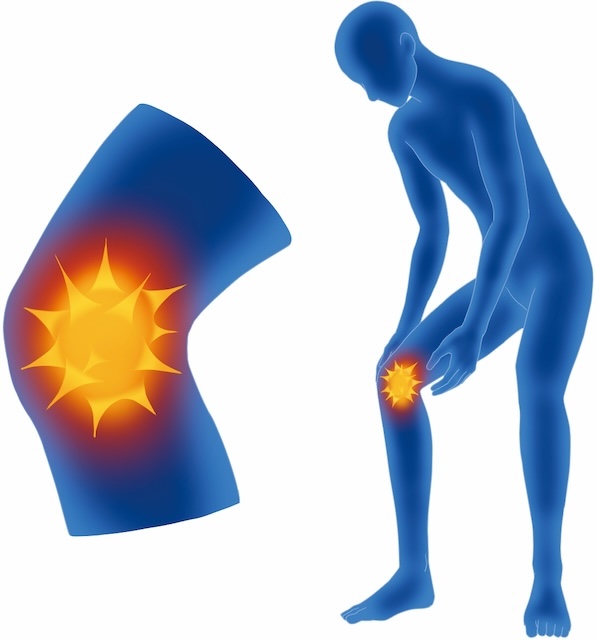
A 17-year-old high school basketball player visited Spine Chiropractic with persistent pain in his right knee.
Approximately two months earlier, he had first noticed discomfort in his right knee while taking a shot during a basketball game. He continued participating in basketball, but the discomfort gradually became more painful and eventually began to bother him even while walking.
He visited an orthopedic clinic, where an X-ray was taken. He was told that there were no obvious abnormalities in the bones and was prescribed a pain-relief patch.
He subsequently began visiting a Japanese osteopathic clinic with his parents twice a week, where he received electrical stimulation and thigh massage. These treatments temporarily reduced his pain for a day or two, but the symptoms repeatedly returned.
As the pain became stronger and more frequent, his parents began looking for another treatment option. They found Spine Chiropractic through Google Maps while searching for chiropractic and osteopathic clinics in the area. After seeing that knee pain was listed among the conditions addressed at the clinic, they decided to visit.
His goal was to recover as quickly as possible so that he could return to playing full games rather than participating only as a substitute.
[Initial Symptoms]
Interview
The patient reported that his symptoms began approximately two months earlier when he felt discomfort in his right knee while taking a shot during a basketball game.
Since then, the discomfort had gradually progressed into persistent pain.
He had already tried treatment at an orthopedic clinic and a Japanese osteopathic clinic. He had also tried massaging his knee himself and using pain-relief patches, but these measures had not provided lasting improvement.
Because of the pain, he had only been able to participate in games for short periods as a substitute.
He was highly motivated to recover and return to full participation in basketball.
Visual Inspection
No obvious abnormalities were observed during visual inspection.
Static Palpation
Increased muscle tension was noted in the right quadriceps, particularly in the vastus medialis.
Increased tension was also observed in the right adductor muscle group.
Motion Palpation
External rotation of the right hip was restricted compared with the left.
There was no significant pain during knee flexion, but the range of right knee flexion was slightly more limited than on the left.
Orthopedic Tests
- Knee Adduction Test: Negative
- Knee Abduction Test: Negative
Muscle Strength Examination
No obvious weakness was identified in the muscles associated with the hip or knee.
However, the patient reported discomfort in the right knee during quadriceps testing, particularly when testing the vastus medialis and rectus femoris.
Initial Treatment
One of the notable features of this case was that the patient’s pain was more pronounced during the moment of jumping than during landing.
Based on this observation and the examination findings, I considered not only the quadriceps but also the muscles involved in hip and pelvic movement, including the iliopsoas, gluteal muscles, and core musculature.
Treatment focused on improving the mobility and function of these muscle groups and on assessing the movement of the pelvis, hip, and knee.
The lumbar spine, pelvis, and sacrum were also assessed, and chiropractic adjustments were performed where appropriate.
Rather than focusing exclusively on the painful area around the knee, I considered the movement of the lower extremity as a functional chain involving the lumbar spine, pelvis, hip, and knee.
The patient was asked to return three days later, after two basketball practices, so that his response to treatment could be assessed.
Treatment Outcome
Second Visit
The patient had participated in two days of basketball practice before returning.
He still experienced right knee pain during practice, but reported that both the intensity and duration of the pain had decreased.
The same general treatment approach was continued.
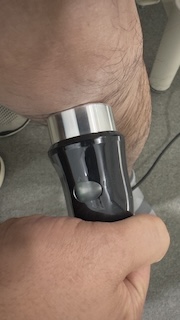
Ultrasound therapy was also introduced and applied around the patellar tendon. Because the patient reported that the pain was more noticeable toward the inner side of the knee, the vastus medialis region was also treated.
After treatment, he reported that knee flexion, extension, and jumping felt significantly easier.
A follow-up visit was scheduled for one week later.
Third Visit
During the following week, the patient participated in approximately four basketball practices.
The pain occasionally returned after repeated activity, but he followed the home-care instructions provided to him. When pain occurred, he applied ice and performed gentle circular massage around the kneecap.
He reported that the pain usually settled by the following morning, allowing him to return to full participation in basketball.
Because differences in pelvic and hip movement continued to be observed during examination, these areas were reassessed and treated as needed.
At this visit, resistance-band leg presses and squats were introduced as exercises to perform before basketball practice.
He was instructed not to perform the squats if they increased his knee pain, as the exercise places load on the knee.
Because the pain had become less intense and recovery after activity was becoming quicker, the treatment interval was extended to two weeks.
Fourth Visit
Over the following two weeks, the patient continued the recommended strength-training exercises.
At the fourth visit, he reported:
“Just as you said, doing strength training before practice prevents the pain.”
The pain had decreased to a level that no longer significantly bothered him, and any discomfort that did occur resolved quickly.
He was able to participate in basketball without the previous level of limitation.
At this point, the intensive treatment phase was concluded.
He was advised to return for reassessment if the symptoms returned or became more persistent.
[Practitioner’s Opinion]

Because this patient presented with anterior knee pain during basketball, it was important to consider conditions that commonly cause pain around the front of the knee in adolescent athletes, including Osgood-Schlatter disease and patellar tendon-related pain, commonly referred to as jumper’s knee.
Osgood-Schlatter disease typically involves pain and tenderness around the tibial tuberosity, while patellar tendinopathy is generally associated with pain around the patellar tendon, particularly with activities involving repeated jumping and loading of the extensor mechanism. These conditions can overlap in their presentation, especially in young athletes involved in running and jumping sports.
In this case, the patient had already been evaluated at an orthopedic clinic and was told that there were no obvious bony abnormalities on X-ray.
More importantly, there was no pain or tenderness reproduced by palpation or percussion of the tibial tuberosity during my examination.
Based on the location and behavior of his symptoms, together with the examination findings, I considered patellar tendon-related pain, commonly known as jumper’s knee, to be the more likely clinical presentation.
One of the most interesting aspects of this case was the timing of the pain.
The patient reported that the pain was strongest during the moment of jumping rather than during landing.
Jumping and landing place different types of mechanical demands on the lower extremity. During jumping, the quadriceps and other muscles involved in knee extension generate force to propel the body upward, while landing requires the lower extremity to absorb external load.
For this reason, I considered it important to determine not simply whether jumping caused pain, but exactly when during the movement the pain occurred.
In this patient, the pain was most noticeable during the active phase of jumping and tended to linger afterward.
He also reported that massage of the quadriceps at home provided some relief, whereas stretching could sometimes aggravate the discomfort.
Rather than interpreting this as evidence of a single underlying cause, I used these responses to help determine which types of movement and loading were better tolerated by the patient.
Another important part of this case was exercise.
As his symptoms improved, we introduced resistance exercises before basketball practice, while emphasizing that the exercises should not increase his knee pain.
Progressive loading and appropriate management of sporting activity are important considerations when managing patellar tendon-related pain. Exercise should be progressed according to the individual’s symptoms and tolerance rather than simply increasing the amount of load as quickly as possible.
In this case, the patient reported that performing the prescribed strength exercises before practice was associated with a significant reduction in his symptoms during basketball.
However, this single case cannot establish that the strength exercises or chiropractic treatment alone caused the improvement.
The patient’s recovery occurred alongside several changes, including treatment, exercise, activity management, and home care.
From a chiropractic perspective, I also considered the relationship between the lumbar spine, pelvis, hip, and knee rather than focusing exclusively on the painful area.
The examination repeatedly showed differences in pelvic and hip movement, so these areas were reassessed and addressed during treatment.
The purpose was not simply to “realign” the body, but to improve movement and function throughout the lower extremity and to determine whether these changes affected the patient’s symptoms.
The patient ultimately returned to full participation in basketball without significant knee pain.
His father later reported some great news: his son was playing basketball pain-free and had recently competed in a tournament where his team finished as runners-up.
This was an excellent outcome for the patient, particularly because his original goal was simply to be able to return to playing full games.
Chiropractic Care for Sports-Related Knee Pain in Yokohama
Spine Chiropractic is located in Bashamichi, Yokohama, just a one-minute walk from Bashamichi Station Exit 6.
The clinic is also approximately seven minutes from JR Kannai Station, eight minutes from Nihon-Odori Station, and 12 minutes from JR Sakuragicho Station.
I provide chiropractic care in both Japanese and English for patients in Yokohama, including Bashamichi, Kannai, Minatomirai, Sakuragicho, and surrounding areas.
If you are experiencing knee pain during basketball, jumping, running, or other sports activities, Spine Chiropractic can assess your musculoskeletal condition and determine whether chiropractic care may be appropriate.