A 50-Year-Old Woman with Right Foot Pain After Wearing Heels for More Than 30 Minutes
A woman in her 50s who frequently wears heels for work visited Spine Chiropractic with pain in the sole of her right foot.
Her company had recently begun encouraging employees to work in the office four days a week. As a result, she was wearing work shoes, including pumps and low heels, more frequently than before.
She gradually began experiencing pain in the sole of her right foot.
Interestingly, the pain was limited to the right foot. The discomfort improved when she was sitting at her desk, but it became noticeable during her commute and when she had to walk around the office.
By the evening, she sometimes experienced a dull ache in the sole of her right foot and regularly used ice to relieve the discomfort.
Because the pain persisted, she visited a local orthopedic clinic and underwent X-ray examination. No obvious abnormalities were found in the bones.
She was diagnosed with plantar fasciitis and prescribed pain medication, with instructions to monitor the condition.
She continued visiting the orthopedic clinic once a week, but no specific treatment was provided. At her third visit, she was advised to try orthotic insoles if the symptoms continued.
She purchased the insoles, but they actually increased her pain, so she eventually stopped using them.
After more than a month of persistent symptoms, she searched online for other treatment options.
She found social media posts suggesting that acupuncture, osteopathy, and chiropractic care could be helpful for plantar foot pain. She decided to try chiropractic care.
Because she was afraid of needles, she did not want to try acupuncture. Spine Chiropractic was her second attempt at seeking chiropractic or osteopathic treatment.
She told me that if her symptoms did not improve, she was considering visiting a larger hospital.
[Initial Symptoms]
Interview
The pain was mainly located along the medial side of the sole of the right foot, near the big toe.
When she stayed off the affected foot at home, the pain gradually decreased. However, walking almost always triggered the discomfort.
Athletic shoes with better cushioning were more comfortable than her work shoes.
On weekends, and even on workdays when she did not need to meet clients, she would change from her work shoes into athletic shoes during her commute to reduce the pain.
Visual Inspection
When standing, the right knee was noticeably positioned inward while the toes pointed outward.
Although the patient’s symptoms were localized to the sole of the foot, this observation suggested that it was important to assess the alignment and movement of the entire lower extremity rather than focusing only on the painful area.
Static Palpation
With the patient standing and lying supine, increased tension was noted in the right quadriceps, particularly the vastus medialis.
No significant difference in muscle tension was noted between the two sides when the patient was seated.
In the standing position, increased tension was also noted in the medial portion of the right soleus and the right peroneus longus.
Motion Palpation
Assessment of the knee joint revealed restricted external rotation on the right side.
No other significant joint restrictions were identified during the initial assessment.
Orthopedic Tests
A series of orthopedic tests were performed from the hip through the ankle.
No clear positive findings were identified with the standard orthopedic tests performed.
However, the knee adduction test produced tenderness at the medial aspect of the right knee where pressure was applied.
Muscle Strength Examination
Strength testing of the tibialis anterior showed 4/5 strength on the right side.
The patient was able to generate force, but reported that it felt more difficult to generate strength on the right compared with the left.
[Initial Treatment Approach]
Although the patient’s main complaint was pain in the sole of the right foot, the examination revealed a characteristic lower-extremity movement pattern.
The right knee tended to move inward while the toes pointed outward.
Rather than treating this simply as a foot-pronation problem, I considered the possibility that the relationship between the hip, knee, ankle, and foot was contributing to the way load was distributed through the foot during standing and walking.
For this reason, the treatment approach was not limited to the plantar fascia.
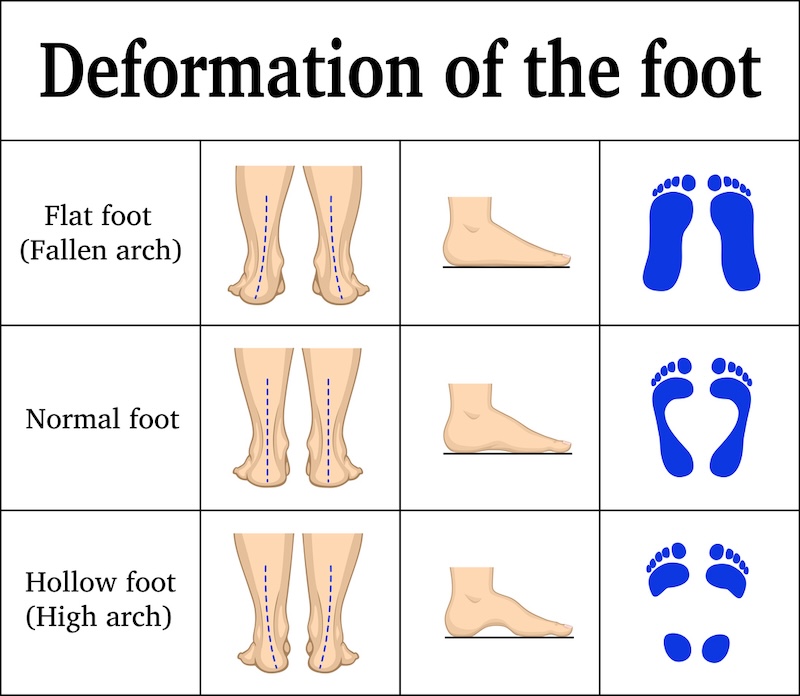
The first session focused on reducing excessive muscle tension and improving the movement of the knee, ankle, and foot.
Treatment was also applied to the plantar fascia and the flexor muscles underneath it, which contribute to toe movement.
The hip and pelvis were also considered as part of the overall lower-extremity movement pattern.
The patient was asked to return within one week so that her response to the initial treatment could be reassessed.
[Treatment Progress]
Second Session
The patient reported that the pain returned while she was on her way home after the first treatment, and she did not notice a significant immediate improvement.
However, because this was only the first treatment, it was too early to determine how she would respond over time.
The same general approach was continued.
This time, the treatment was expanded to include the hip joint and pelvis in order to address the overall movement and alignment of the lower extremity.
She was asked to return within one week.
Third Session
At the third visit, the patient reported that the pain had returned to approximately the same level as before treatment.
However, unlike after the first session, she had experienced several days during which the pain was noticeably reduced following the second treatment.
Because there appeared to be a temporary reduction in symptoms, the treatment approach was continued while reassessing the entire lower extremity rather than focusing only on the painful area.
Kinesiology tape was applied to the medial thigh and ankle following the treatment.
She was also instructed in home exercises targeting the muscles on the outside of the foot and the medial calf.
Fourth Session
At the fourth visit, the patient reported that she had experienced almost no pain during the previous week.
A slight sense of discomfort remained, but the pain had decreased to approximately 2–3/10 compared with the initial visit.
The same general treatment approach was continued.
Because her symptoms had become more stable, the interval between treatments was extended to two weeks.
Fifth Session
Two weeks later, the patient reported that some pain had returned during the second week.
However, the intensity was still approximately half of what it had been at the initial visit.
The same treatment approach was continued.
Compared with the initial examination, the relationship between the knee and ankle had also improved, and she was able to maintain the improved movement pattern for approximately two weeks.
She was consistently performing the home exercises that had been prescribed, which may also have contributed to maintaining the improvement.
Kinesiology taping had been applied after each treatment, and she was also taught how to apply the tape herself at home.
As changes in the lower-extremity movement pattern could affect her gait, I also recommended reviewing her footwear and changing to shoes that provided appropriate support and comfort.
At this point, the intensive treatment phase, which had involved treatment approximately every two weeks, was completed.
She then transitioned to maintenance care, with treatment approximately every three to four weeks to monitor her condition.
[Practitioner’s Opinion]
At the initial consultation, the most noticeable finding was the patient’s standing alignment: the right knee tended to move inward while the toes pointed outward.
Although her pain was localized to the plantar surface of the foot, the examination suggested that her lower-extremity movement pattern could be contributing to how load was distributed through the foot.
In particular, the combination of inward movement of the knee and outward positioning of the foot may have increased mechanical stress on the medial side of the foot during standing and walking.
However, plantar fasciitis is not caused by a single factor in every patient.
Footwear, walking volume, activity level, body weight, tissue loading, and individual movement patterns can all contribute to plantar heel or foot pain.
Therefore, I would not consider the knee or ankle alignment alone to be the definitive cause of this patient’s symptoms.
The important point in this case was that treating only the painful area did not fully explain the patient’s presentation.
Instead, we assessed the hip, pelvis, knee, ankle, and foot as a functional chain and considered how these areas were working together during standing and walking.
Treatment therefore included the plantar fascia and surrounding muscles, but also the joints and muscles of the lower extremity.
Home exercises, kinesiology taping, and footwear modification were also incorporated into the treatment plan.
The patient’s consistent participation in these self-care measures was an important part of the overall management of the condition.
This case illustrates why, when a patient presents with foot pain, it can be useful to look beyond the painful area and assess how the hip, knee, ankle, and foot are functioning together.
At Spine Chiropractic, the goal is not simply to treat the location of pain, but to assess the movement and mechanical factors that may be contributing to the patient’s symptoms and to develop an approach that combines hands-on care with appropriate self-management.
At Spine Chiropractic, I address a wide range of musculoskeletal conditions directly impacting daily life, not merely as a form of relaxation therapy. Conveniently located within a one-minute walk from Bashamichi Station, an eight-minute walk from Nihon-Odori Station, a seven-minute walk from JR Kannai Station, and a 12-minute walk from JR Sakuragicho Station, my clinic is well-suited for residents and workers in the Yokohama area.
If you are experiencing similar symptoms, please feel free to visit Spine Chiropractic. I am committed to providing care with sincerity and professionalism.