A Woman in Her 20s with Left Pelvic and Sacroiliac Joint Pain After Childbirth
A woman in her 20s visited Spine Chiropractic with left-sided pelvic pain that had continued since shortly after giving birth.
She had given birth approximately one month earlier. A few days after returning home from the hospital, she began experiencing discomfort around the left side of her pelvis, particularly around the sacroiliac (SI) joint.
She had occasionally experienced lower back pain in the past, but this was different from anything she had experienced before.
Rather than feeling pain throughout her lower back, she felt pain in a relatively small, localized area around the left side of her pelvis.
Because she was caring for her newborn and had very little opportunity to rest, the pain gradually became worse.
At her postpartum checkup, she discussed her symptoms with the maternity clinic. Because she was breastfeeding, she was prescribed acetaminophen and medicated patches, and was advised to monitor the symptoms.
However, her condition did not improve.
She also searched online for exercises for postpartum pelvic pain and tried several pelvic exercises on her own. Unfortunately, some of these exercises actually made the pain worse.
Her husband subsequently searched for other treatment options and came across chiropractic care.
After searching for “chiropractor Yokohama,” he found Spine Chiropractic. When he saw that postpartum pain was one of the conditions treated at the clinic, he suggested that she give chiropractic care a try.
She decided to visit Spine Chiropractic in Bashamichi.
[Initial Symptoms]
Interview
The patient reported that sitting for an extended period caused a gradual, dull increase in pain around the left side of her pelvis.
When she put weight on the left side while sitting, the pain became stronger, so she naturally shifted her weight toward the right side.
Because this continued over time, she had begun to feel as though her pelvis was “out of alignment.”
She also reported an unusual rubbing sensation around the left lower back and pelvic area when walking while wearing jeans or other stiff clothing.
Visual Inspection
When standing, differences were observed in the height of the pelvis and the relative position of the hip joints.
During the seated interview, she also tended to lean toward the right side in order to avoid putting pressure on the painful left side.
Static Palpation
Increased tension was noted in the right lumbar and gluteal muscles.
A positional difference was also observed around the right hip.
On the left side, increased tension was noted in the gastrocnemius and soleus muscles.
Differences were also noted in the position and relationship of the iliac bones and sacroiliac joints.
Motion Palpation
During standing hip flexion and extension, moving the right hip produced discomfort around the left side of the pelvis while the left leg was bearing weight.
Flexion and extension of the left hip also reproduced discomfort around the left sacroiliac joint.
In the prone position, applying pressure around the left sacroiliac joint reproduced her pain.
Orthopedic Tests
DLR Test: Negative. Mild discomfort was reported on the left side.
Ely’s Test: Negative. Left knee flexion produced lower back discomfort and elevation of the hip.
Nachlas Test: Positive. Pain was reproduced around the left sacroiliac joint.
Gaenslen’s Test: Pain was reproduced around the left sacroiliac joint.
Overall, the examination findings were consistent with mechanical pain involving the left sacroiliac region.
Muscle Strength Examination
Quadratus Lumborum: 5/5
Tensor Fasciae Latae: Left 5/5, although postural stability decreased during the test.
Gluteus Maximus: Left 4/5
Gluteus Medius and Minimus: Left 4/5
Reduced strength was noted in the left gluteal muscles, indicating a difference in muscle function between the two sides.
[Initial Treatment Approach]
The patient’s pain was clearly localized around the left sacroiliac region, and differences were also observed in her standing posture, sitting position, and hip movement.
For this reason, the initial treatment focused on assessing and addressing the movement of the pelvis, sacroiliac region, and lumbar spine.
At Spine Chiropractic, I place particular emphasis on joint mobility. However, because joint movement and surrounding muscle function are closely related, each patient’s examination findings are used to determine whether muscular tension should be addressed first or whether joint mobility should be addressed first.
In this case, the symptoms were localized around the left sacroiliac region, while the surrounding muscles also showed clear differences in tension and strength.
During the first treatment, the pelvis, sacroiliac joint, and related lumbar spine were addressed after confirming that the treatment position itself did not reproduce her pain.
After treatment, movements and positions that had previously caused discomfort—including sitting, standing, and hip flexion and extension—were reassessed.
The discomfort had noticeably decreased, and the patient was surprised by the immediate difference.
The next finding that required attention was the imbalance in muscle function around the pelvis.
The right-sided muscles were excessively tense, while the left gluteal muscles showed reduced strength.
Therefore, treatment was aimed at reducing excessive tension on the right while also introducing exercises to improve activation and strength on the left.
The patient responded well to the initial treatment, although she temporarily experienced an unfamiliar sensation as her movement pattern changed.
Because an early follow-up allows the response to treatment to be assessed accurately, she was scheduled to return five days later.
[Treatment Progress]
Second Visit
The patient reported that her symptoms remained improved for approximately two days after the first treatment, but gradually returned afterward.
Because the initial treatment had produced a temporary improvement, the same general approach was continued.
She was also reminded to continue the bodyweight exercises targeting the weaker muscle groups on the left side.
A follow-up within one week was planned.
Third Visit
Following the second treatment, the patient again experienced approximately two days of reduced symptoms before the pain gradually returned.
However, the overall intensity of the pain was slightly lower than at the initial visit.
She was understandably concerned that the symptoms continued to return.
The treatment continued to focus on the left sacroiliac region, but at this point I also considered how her body was being loaded during everyday activities.
In particular, her weight distribution and center of gravity during standing and walking were reassessed.
Because these factors appeared to warrant a broader approach, treatment was expanded to include the knee and ankle regions.
This approach produced a better response.
By the fourth visit, the patient reported that her pain had remained below half of its initial intensity for approximately one week.
She was also beginning to feel more confident about her recovery.
Fourth Visit
The reduced level of pain had remained stable for one week.
The same general treatment approach was continued, and because her symptoms were becoming more stable, the interval between visits was extended to two weeks.
Fifth Visit
Two weeks later, the patient reported that the pain had begun to increase slightly around the middle of the second week.
However, it remained approximately half as severe as it had been initially.
Importantly, the rubbing sensation she had previously experienced around the left side of her lower back and pelvis when wearing jeans had completely disappeared.
The same treatment approach was continued, and we decided to observe her symptoms over another two-week interval.
She was instructed to continue her home exercises for the weaker muscle groups on the left.
At this stage, the plan was to reassess the treatment approach if the symptoms returned to their original level, while continuing the current approach if the symptoms continued to improve.
Sixth Visit
By the sixth visit, the patient reported a significant improvement.
She had consistently performed the prescribed bodyweight exercises targeting the weaker muscles on the left, which may have contributed to the improvement.
Her average pain level had decreased to approximately 2–3/10.
At this point, the intensive treatment phase was completed.
She then transitioned to maintenance care at her request, with visits approximately once a month to monitor her condition.
She has now been receiving care for four years, including the period when I was working at my previous clinic, and continues to visit regularly.
[Practitioner’s Opinion]
This case involved localized pain around the left sacroiliac region following childbirth.
The examination showed several differences between the two sides, including pelvic and hip positioning, muscle tension, gluteal muscle strength, and movement patterns.
The pain was also reproduced during several movements and orthopedic tests involving the sacroiliac region.
These findings suggested that mechanical loading of the left sacroiliac region was contributing to the patient’s symptoms.
Postpartum patients can experience substantial changes in their daily physical demands.
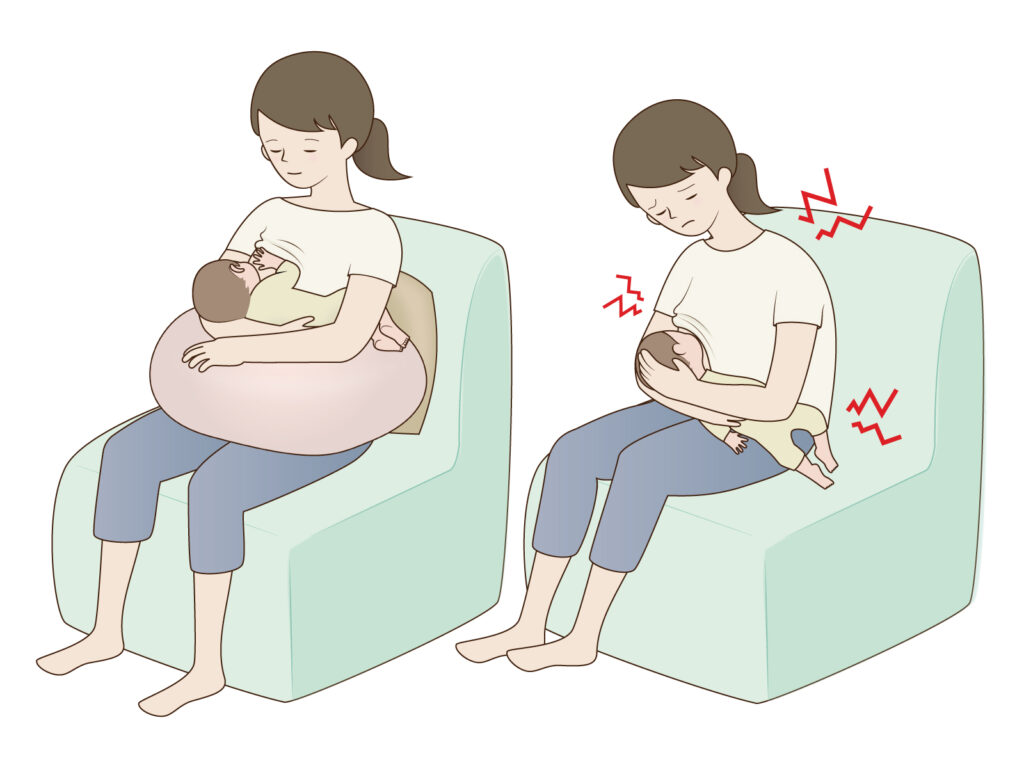
Pregnancy itself changes posture and movement patterns, while activities after childbirth—such as breastfeeding, carrying the baby, prolonged sitting, and changes in sleeping positions—can place additional physical demands on the body.
These factors can alter how a person distributes their weight and uses their muscles during everyday activities.
In this case, the patient naturally shifted her weight toward the right because placing weight on the left increased her pain.
This was accompanied by increased tension in the right lumbar and gluteal muscles, while the left gluteal muscles showed reduced strength.
Rather than assuming that “pelvic misalignment” alone was the cause of her pain, I considered these differences in movement and muscle function as potential contributing factors.
This was also why the treatment approach evolved over time.
The initial treatment focused on the pelvis, sacroiliac region, and lumbar spine.
When symptoms repeatedly returned after approximately two days, the treatment approach was expanded to include the knee and ankle regions, with greater attention to weight distribution and whole-body movement.
Exercise therapy was also an important part of the treatment.
The patient consistently performed exercises targeting the weaker left-sided muscles, and her symptoms gradually became more stable.
From a chiropractic perspective, this case demonstrates why postpartum pelvic pain should not simply be approached as a problem of “pelvic misalignment.”
Instead, it is important to assess how the patient moves, where they place their weight, how the surrounding muscles are functioning, and how changes in daily activities after childbirth may be affecting their body.
In this case, a combination of joint-focused treatment, soft-tissue work, exercise therapy, and consideration of everyday movement patterns was used.
The improvement cannot be attributed to a single treatment component alone. The patient’s participation in her home exercise program and the natural changes in her postpartum physical demands may also have contributed to the improvement.
For women experiencing pelvic or sacroiliac pain after childbirth, evaluating the painful area together with the hips, knees, ankles, muscle function, and everyday movement patterns can help guide an individualized treatment approach.
Looking for an English-Speaking Chiropractor in Yokohama?
At Spine Chiropractic, we provide evidence-informed chiropractic care for a wide range of musculoskeletal conditions that affect daily life, including:
- Chronic shoulder stiffness
- Neck pain
- Lower back pain
- Acute low back pain (acute lumbar sprain)
- Upper back pain
- Thoracic sprain (“acute upper back pain”)
- Joint pain
- Sports-related injuries
- Postural dysfunction
- Postpartum pelvic pain and pelvic dysfunction
Our goal is not simply to provide temporary symptom relief, but to identify the underlying cause of your condition, restore normal joint function, improve movement, and help reduce the risk of recurrence through individualized chiropractic care.
Spine Chiropractic is conveniently located in the heart of Yokohama, just 1 minute from Bashamichi Station, 7 minutes from JR Kannai Station, 8 minutes from Nihon-Odori Station, and 12 minutes from JR Sakuragicho Station.
We welcome both local residents and international patients, providing professional chiropractic care in both English and Japanese. If you are searching for an English-speaking chiropractor in Yokohama, our clinic offers comprehensive assessment and personalized treatment tailored to your individual needs.
Whether you are experiencing chronic shoulder stiffness, neck pain, lower back pain, joint pain, sports injuries, or posture-related discomfort, we are committed to helping you move better, feel better, and return to your daily activities with confidence