A Woman in Her 30s with Right Shoulder Pain and Left-Sided Back Pain
The patient visited my clinic with right shoulder pain and left-sided lower back pain, which had become increasingly noticeable over the previous month.
She had been experiencing chronic shoulder stiffness and lower back discomfort since starting her desk-based job approximately five to six years earlier.
To manage these symptoms, she had been receiving massage therapy approximately once every two weeks. She had also started strength training at the gym, which initially seemed to help her symptoms last longer between treatments.
However, over the past month, her symptoms had progressed from general stiffness and discomfort to more persistent pain. Massage therapy was no longer providing sustained relief, and exercise at the gym sometimes seemed to aggravate her symptoms.
Seeking a more comprehensive approach, she searched for chiropractic and manual therapy clinics around the Kannai and Bashamichi areas. After finding my clinic and reviewing the website, she decided to make an appointment.
Initial Examination
Medical Interview
The patient reported a history of chronic shoulder stiffness and lower back discomfort, including previous episodes of acute low back pain. She also occasionally experienced headaches when her shoulder stiffness became particularly severe.
During the consultation, she mentioned that she had been diagnosed with mild scoliosis during her school years. As it had not significantly affected her daily activities at the time, she had largely forgotten about the diagnosis.
After entering the workforce and spending long hours at a desk, her shoulder and lower back symptoms gradually became chronic.
She had been managing these symptoms through regular massage therapy and gym exercise. However, the recent increase in pain and the lack of lasting relief prompted her to seek chiropractic care.
Visual Inspection
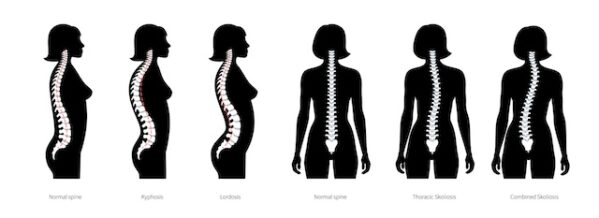
Postural observation suggested spinal asymmetry, and her history of scoliosis was taken into consideration during the assessment.
I evaluated several anatomical landmarks, including shoulder height, scapular position, and pelvic alignment.
The following findings were observed:
- Elevation of the right shoulder
- Lateral displacement (abduction) of the right scapula
- Left lateral shift of the pelvis
These findings indicated asymmetry involving the shoulder girdle and pelvic region.
Static Palpation
Right Shoulder and Cervical Region
Increased muscle tension was identified in the following muscle groups:
- Trapezius
- Levator scapulae
- Sternocleidomastoid
- Supraspinatus and infraspinatus
- Serratus anterior
Left Pelvic and Lower Back Region
Increased muscle tension was identified in the following muscle groups:
- Lumbar erector spinae
- Gluteal muscles
- Oblique and transversus abdominis muscles
- Tensor fasciae latae (TFL)
Notable differences in muscle tension were observed between the right shoulder region and the left pelvic region.
Motion Palpation
The following findings were observed during movement assessment:
- A mild left rib hump was visible during forward flexion.
- Marked elevation of the right shoulder occurred when raising the right arm.
- In standing, right lateral flexion of the trunk was noticeably easier than left lateral flexion.
These findings suggested asymmetry in spinal, shoulder girdle, and pelvic movement.
Orthopedic Tests
No specific diagnostic tests for confirming scoliosis were performed during this examination.
The postural and movement assessments were used to evaluate functional asymmetries and consider the patient’s previous scoliosis diagnosis.
A clinical examination alone cannot determine the precise degree or structural classification of scoliosis. Radiographic assessment may be required when confirmation or measurement of spinal curvature is clinically indicated.
Muscle Strength Examination
Manual muscle testing revealed the following findings:
| Muscle | Finding |
|---|---|
| Deltoid | Left 4/5 — slightly weaker than the right |
| Latissimus dorsi | Right 4/5 — slightly weaker than the left |
| Serratus anterior | Left 4/5 — slightly weaker than the right |
| Gluteus medius/minimus | Left 4/5 — slightly weaker than the right |
| Tensor fasciae latae | Right 4/5 — slightly weaker than the left |
These findings indicated differences in muscle strength involving several muscle groups around the shoulder girdle and pelvis.
Initial Treatment Plan and Chiropractic Approach
The initial assessment revealed right shoulder elevation, left lateral displacement of the pelvis, and asymmetrical muscle tension and strength.
My treatment approach focused on addressing both the local muscular dysfunction and the functional condition of the spine and related joints.
First, I applied soft-tissue treatment to the muscles showing increased tension. Targeted strengthening exercises were also recommended for muscle groups that demonstrated reduced strength during manual muscle testing.
Although addressing muscular tension provided initial symptom relief, I considered it important to assess the broader spinal and joint function rather than focusing exclusively on the symptomatic muscles.
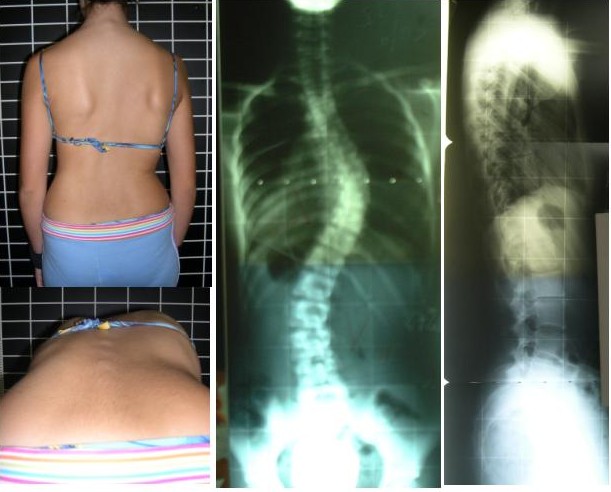
Note: The images are not of the actual patient.
Creator:Rigo M, Negrini S, Weiss HR, Grivas TB, Maruyama T, Kotwicki T
Source:Rigo M, Negrini S, Weiss HR, Grivas TB, Maruyama T, Kotwicki T; SOSORT. Scoliosis 2006, 1:11. PMID 16857045. doi:10.1186/1748-7161-1-11.
Assessment of Spinal Segmental Function
From a chiropractic perspective, muscular tension and weakness are not evaluated in isolation. I also assess the mobility and functional status of the spinal segments associated with the surrounding musculoskeletal structures.
In this case, the patient’s postural assessment suggested a scoliotic pattern, with right convexity in the thoracic region and left convexity in the lumbar region.
This pattern was considered when assessing spinal mobility and the distribution of muscular tension.
Within the chiropractic framework, restricted or altered spinal segmental function, sometimes described using the concept of vertebral subluxation, may be considered relevant to the functional imbalance observed in the surrounding muscles and joints.
Therefore, my assessment extended beyond the areas of pain to include the mobility and function of the spine as a whole.
Based on these findings, I incorporated full-spine chiropractic adjustments alongside the soft-tissue treatment.
The objective was not simply to reduce muscle tension or make both sides of the body appear symmetrical. Rather, the aim was to address the patient’s individual movement restrictions, muscular imbalance, and spinal segmental function as part of a comprehensive treatment approach.
Treatment Progress and Prognosis
Initial Visit
Treatment initially focused on reducing muscle tension around the right shoulder and left lower back.
This was followed by full-spine chiropractic adjustments, with the aim of addressing restricted joint mobility and the functional asymmetries identified during the examination.
The patient reported an improvement in her symptoms following the treatment, accompanied by reduced muscular tension.
Second Visit
The patient returned one week later.
She reported that her symptoms had improved for approximately three days following the first treatment, but gradually returned afterward.
I explained that symptom improvement following an individual treatment does not necessarily mean that the changes will be maintained immediately, particularly in cases involving long-standing discomfort and habitual movement patterns.
The same general treatment approach was continued, combining soft-tissue treatment and full-spine chiropractic adjustments.
I also prescribed targeted strengthening exercises for the muscle groups that had demonstrated reduced strength during the initial examination.
Visits 3–6
During this period, the patient attended approximately once every one to two weeks.
Her progress was monitored, and the treatment approach continued to focus on muscular tension, spinal mobility, and functional asymmetries.
In addition to chiropractic care, the patient began attending Pilates sessions at our partner studio, Kula Pilates.
Based on my clinical recommendations, the Pilates sessions incorporated exercises focusing on core muscle strength and control.
I considered the combination of chiropractic care and regular exercise an important part of her overall management.
Over time, she reported that her symptoms had become much less noticeable. Even during periods of increased workload, she experienced little to no recurrence of her previous shoulder and lower back discomfort.
From the Seventh Visit Onward
The patient gradually transitioned to periodic maintenance care.
She currently receives chiropractic adjustments approximately once a month while continuing her Pilates practice.
This combination has helped her maintain an active lifestyle with minimal recurrence of her previous symptoms.
Practitioner’s Opinion
Chronic shoulder stiffness and lower back pain can be associated with a combination of factors, including occupational demands, prolonged sitting, physical activity levels, and individual movement patterns.
In this case, the patient had a history of mild scoliosis and presented with noticeable asymmetries involving the spine, shoulder girdle, and pelvis.
However, it is important to distinguish between structural scoliosis and functional postural asymmetry.
The patient’s history of scoliosis and the findings observed during the examination suggested a possible relationship between her spinal alignment and the distribution of muscular tension. Nevertheless, the clinical findings alone cannot establish that scoliosis was the direct cause of her shoulder and lower back pain.
Radiographic examination may be necessary to confirm the presence, degree, and structural classification of scoliosis when clinically indicated.
Understanding Muscular Imbalance and Spinal Function from a Chiropractic Perspective
One important aspect of my chiropractic approach is that I do not assess only the muscles in which pain or excessive tension is present.
I also consider the functional relationship between the spinal segments, surrounding joints, and the muscles involved in movement.
In patients presenting with asymmetrical muscle tension and strength, I assess whether restricted spinal segmental mobility or altered joint function may be relevant to the overall movement pattern.
Within the chiropractic framework, these findings may be considered in relation to the concept of vertebral subluxation. This provides a clinical model for assessing spinal segmental function and its potential relationship with surrounding neuromuscular function.
In this case, the combination of right shoulder pain, left lower back pain, and asymmetrical findings throughout the spine and pelvis led me to take a whole-spine approach rather than treating each painful area independently.
I combined soft-tissue treatment with full-spine chiropractic adjustments, while also recommending targeted strengthening exercises.
It is important to recognize that this clinical approach does not establish that spinal segmental dysfunction directly caused the patient’s muscular imbalance or pain. Rather, assessing the spine, joints, and surrounding muscles together is part of my chiropractic clinical reasoning.
The Role of Exercise and Pilates
Another important factor in this case was the patient’s participation in Pilates.
Chiropractic treatment and soft-tissue therapy may help reduce symptoms and improve movement in the short term. However, maintaining physical function also requires active participation from the patient.
The Pilates sessions focused on core muscle strength and control, helping her develop a consistent exercise routine alongside chiropractic care.
The combination of chiropractic treatment, targeted strengthening, and Pilates may have contributed to her improvement and the reduction in symptom recurrence.
Although the improvement was encouraging, it is not possible to determine how much each individual treatment component contributed to the outcome.
For patients with scoliosis or persistent postural asymmetry, I believe it is important to consider not only symptom relief but also long-term physical function, movement habits, and appropriate exercise.
At Spine Chiropractic, I aim to assess the whole musculoskeletal system and develop an approach that combines hands-on treatment with practical advice and exercise where appropriate.
Chiropractic Care for Scoliosis, Shoulder Pain, and Lower Back Pain in Yokohama
At Spine Chiropractic, I provide chiropractic care for a wide range of musculoskeletal conditions, including chronic shoulder stiffness, lower back pain, neck pain, and discomfort associated with postural and movement asymmetries.
My approach involves assessing not only the area of pain but also spinal mobility, joint function, muscle tension, and strength differences.
Where appropriate, I combine chiropractic adjustments and soft-tissue treatment with exercise recommendations to support long-term physical function.
My clinic is located in Yokohama’s Naka Ward, just a one-minute walk from Bashamichi Station. It is also accessible from JR Kannai Station (7 minutes), Nihon-Odori Station (8 minutes), and JR Sakuragicho Station (12 minutes).
I provide chiropractic care in both English and Japanese.
If you are looking for an English-speaking chiropractor in Yokohama or are experiencing chronic shoulder pain, lower back pain, or discomfort associated with scoliosis, please feel free to contact Spine Chiropractic.