A Woman in Her 30s from Minatomirai with Pubic Pain After Childbirth
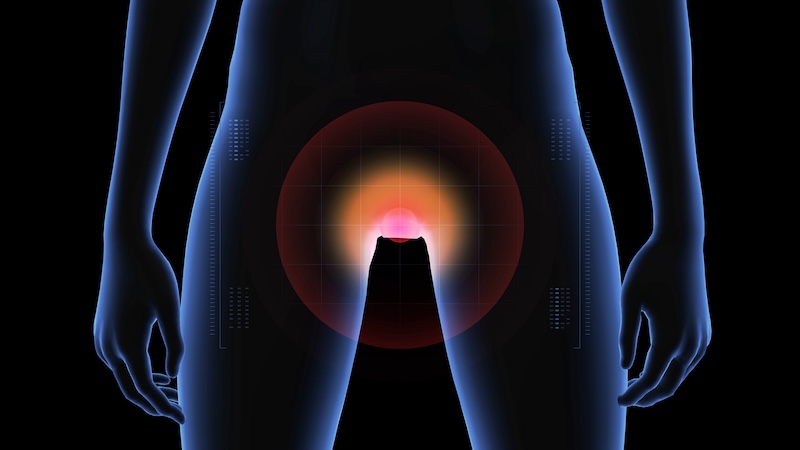
A woman in her 30s visited Spine Chiropractic with pain and discomfort around the pubic area that had started shortly after giving birth.
She had given birth approximately one month earlier. Soon after childbirth, she began noticing an unusual sensation around the pubic symphysis, which gradually became painful during everyday movements.
The symptoms were particularly noticeable when bending forward, standing up from a bent position, and lifting her baby.
She also experienced pain when lifting her right leg while putting on her pants.
As a first-time mother, she was already adjusting to the physical demands of caring for her newborn, and the pain made these everyday activities increasingly difficult.
Approximately one week after giving birth, she consulted her doctor about the symptoms. Because she was breastfeeding, medication was not prescribed at that time. She was instead given traditional herbal medicine and advised to monitor her symptoms.
Later, she mentioned the ongoing pain during her baby’s health checkup and was advised to consult a gynecologist.
She subsequently visited a gynecologist, where a pelvic X-ray was performed. No obvious abnormalities were found.
She was advised to use a pelvic support belt and to massage the area around the pelvis.
However, her symptoms continued despite these measures.
She then searched online for other options for postpartum pubic pain and pelvic pain after childbirth.
She found Spine Chiropractic and noticed that pregnancy and postpartum pain were among the conditions treated at the clinic.
She had never received chiropractic care before, but decided to give it a try.
[Examination]
Interview
The patient reported that several everyday movements reproduced her symptoms.
These included:
- Pain when standing up from a bent position
- Pain when bending forward
- Pain when lifting her baby
- Pain when lifting her right leg to put on pants
As a new mother, these movements were repeated frequently throughout the day, making it difficult for her to avoid aggravating the area.
She also expressed frustration and anxiety because she had already consulted medical professionals but had not been given a clear explanation for the persistent pain.
Visual Inspection
No obvious abnormalities were observed during visual inspection in the standing position.
Static Palpation
Because the pubic region is a sensitive area, palpation was performed carefully after explaining the procedure and obtaining the patient’s consent.
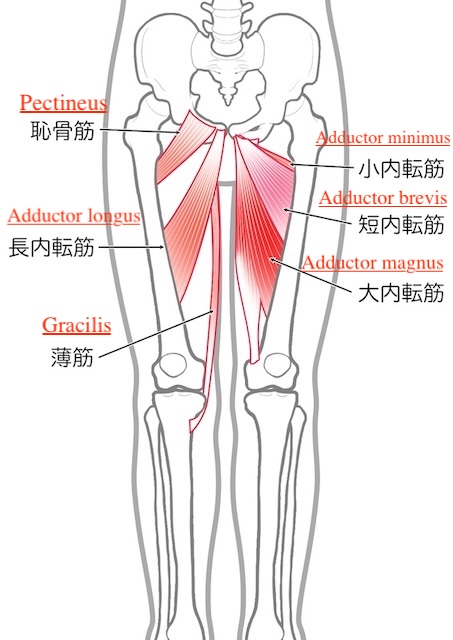
Marked tension was found in the right adductor brevis muscle.
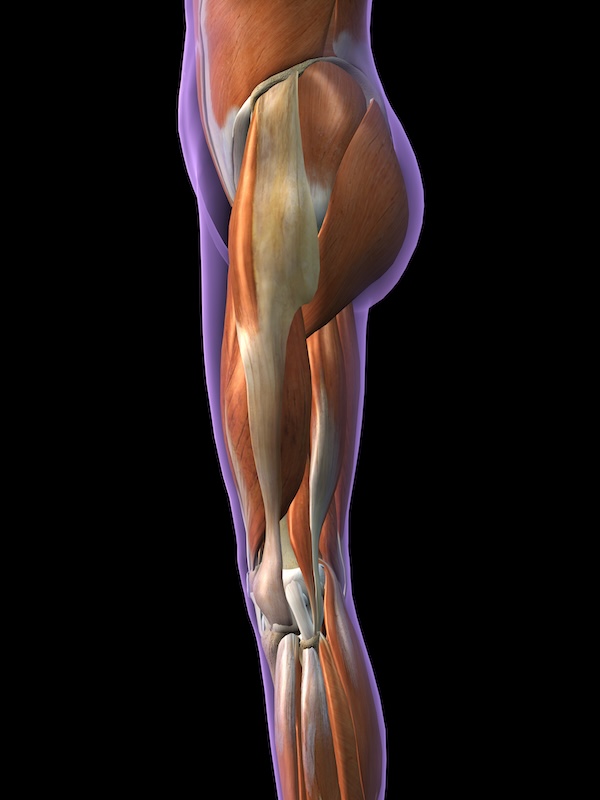
Significant tension was also noted in the left hip abductor muscle group.
This revealed a clear difference in muscle tension between the two sides of the pelvis and thighs.
Motion Palpation
Movement of the pelvis was assessed in several positions.
Differences in pelvic movement were observed between the two sides.
During prone assessment, applying pressure to the pelvic region reproduced a sensation that radiated toward the pubic area.
Orthopedic Tests
The following tests are traditionally used to assess the sacroiliac joints and hip joints. In this case, they were also used to determine whether stress applied through the pelvis and hips could reproduce the patient’s pubic symptoms.
Gaenslen’s Test: Positive
Pain was reproduced around the pubic area on both sides.
Patrick’s Test (FABER): Positive
Pain was reproduced on the right side, extending from the pubic region toward the groin.
Laguerre’s Test: Positive
A similar pain pattern to the Patrick’s test was reproduced on the right side.
These findings reproduced symptoms in the same general region as the patient’s everyday complaints.
Muscle Strength Examination
Muscle strength was assessed using a five-point scale, with 5/5 representing normal strength.
Hip Adductors: Right 3/5
The patient was unable to generate full strength on the right because of pain. Mild pain was also reproduced on the left.
Hip Abductors: 4/5 bilaterally
No significant pain was reproduced during testing, although the patient reported discomfort on both sides.
These findings indicated differences in muscle function around the pelvis and hips, particularly involving the adductor and abductor muscle groups.
[Initial Treatment Approach]
The patient’s symptoms were consistently reproduced during movements that placed a load through the pelvis and pubic region.
The examination also showed significant tension in the right adductor muscles, increased tension in the left hip abductors, and reduced right adductor strength due to pain.
For this reason, the treatment approach was not limited to the pubic area itself.
Instead, the surrounding muscles, hip joints, pelvis, and lumbar region were assessed and treated as part of the overall movement pattern.
The initial treatment focused on reducing excessive tension in the right adductors and left hip abductors.
The lumbar and gluteal muscles were also addressed, followed by an approach to the movement of the pelvis and hip joints.
After treatment, the movements that had previously reproduced her pain were reassessed.
She reported a significant reduction in discomfort during these movements.
Because this was her first chiropractic treatment and because postpartum symptoms can change depending on daily activity, she was advised to monitor her symptoms for approximately one week before returning.
[Prognosis]
Second Visit
At the second visit, the patient reported that her pain had completely disappeared during normal daily activities.
She was particularly relieved that she could bend, stand up, and lift her baby without experiencing the pain that had previously been present.
The same general treatment approach was continued.
Because the symptoms had improved so significantly, she was asked to monitor her condition for another two weeks.
Third Visit
Two weeks later, the patient remained completely free of pubic pain.
She reported no difficulty with her normal daily activities or childcare.
As the symptoms had remained stable without recurrence, the intensive treatment phase was concluded at this point.
The patient was very pleased with the improvement and requested regular check-ups because of the ongoing physical demands of caring for her child.
She therefore transitioned to maintenance care, with visits approximately once a month.
She has now been receiving follow-up care for two years.
Although the original pubic pain has remained resolved, regular visits are used to assess her physical condition and address accumulated fatigue and any changes related to childcare.
[Practitioner’s Opinion]
This patient developed pubic pain shortly after childbirth, with symptoms being reproduced by common movements such as bending, standing up, lifting her baby, and raising one leg to put on her pants.
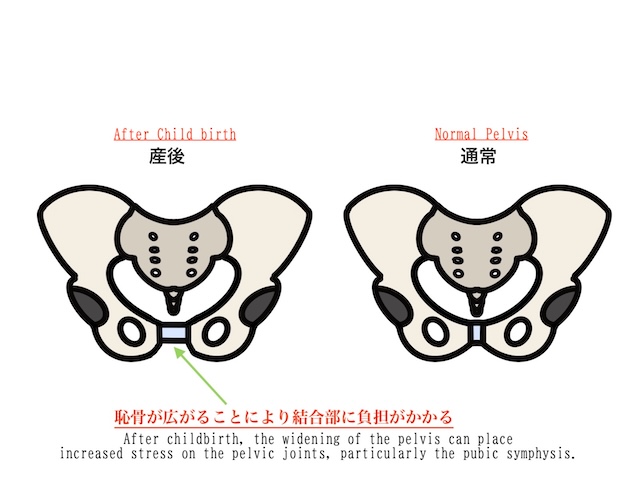
Postpartum pelvic girdle pain can involve different structures around the pelvis, including the pubic symphysis, sacroiliac joints, hip region, and surrounding muscles.
For this reason, it is important not to view postpartum pubic pain simply as a problem of “pelvic misalignment.”
In this case, several findings were particularly relevant.
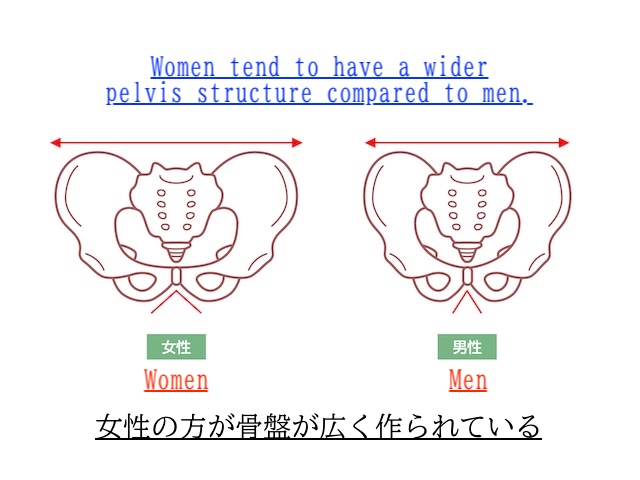
There was significant tension in the right adductor muscles, increased tension in the left hip abductors, and reduced right adductor strength due to pain.
Several orthopedic stress tests also reproduced pain around the pubic region.
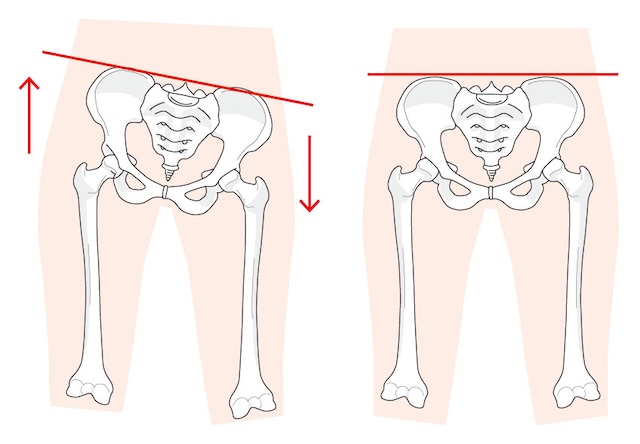
These findings suggested that the pubic region was being affected by mechanical loading involving the surrounding pelvic and hip structures.
The treatment therefore focused on more than simply adjusting the pelvis.
The muscle tension imbalance between the right adductors and left abductors was addressed, while the lumbar region, gluteal muscles, pelvis, and hip joints were also assessed and treated.
The patient’s symptoms improved very quickly after the initial treatment, and she was able to return to normal daily activities without pain.
However, I would not attribute this improvement solely to a change in pelvic alignment.
The improvement may have resulted from several factors, including changes in muscle tension, improved joint movement, reduced mechanical stress around the pubic region, and changes in how the patient was using her body during daily activities.
Why Postpartum Daily Activities Matter
After childbirth, daily physical demands can change dramatically.
Holding a baby on one side, repeatedly lifting the baby from the floor or crib, breastfeeding, changing diapers, and spending prolonged periods sitting can all change the way the body is loaded.
These activities may also encourage asymmetrical weight-bearing or repeated use of the same movement patterns.
For this reason, even after symptoms improve, it is important to pay attention to how the body is being used during everyday childcare.
In this case, the patient was advised to avoid repeatedly placing excessive load on one side and to be aware of movements that reproduced symptoms.
The goal was not simply to correct a perceived pelvic position, but to reduce unnecessary mechanical stress and support more balanced movement.
Chiropractic Care for Postpartum Pubic Pain
This case also highlights the importance of assessing the surrounding structures when someone experiences pubic pain after childbirth.
At Spine Chiropractic in Bashamichi, Yokohama, postpartum pelvic pain is assessed by looking at the painful area together with the hip joints, pelvic movement, surrounding muscles, and the patient’s everyday movement patterns.
Treatment may include joint-focused care, soft-tissue techniques, movement assessment, and advice on daily activities, depending on the individual findings.
The rapid improvement seen in this case was a positive outcome, but it should not be interpreted as evidence that chiropractic treatment alone is responsible for resolving all postpartum pubic pain.
Persistent or severe postpartum pelvic pain should be medically evaluated, particularly when symptoms are worsening, walking becomes significantly difficult, or other concerning symptoms are present.
For women looking for help with postpartum pubic pain, pelvic pain after childbirth, or discomfort around the pubic symphysis in Yokohama, an appropriate assessment can help determine whether conservative care is suitable.
At Spine Chiropractic, I address a wide range of musculoskeletal conditions directly impacting daily life, not merely as a form of relaxation therapy. Conveniently located within a one-minute walk from Bashamichi Station, an eight-minute walk from Nihon-Odori Station, a seven-minute walk from JR Kannai Station, and a 12-minute walk from JR Sakuragicho Station, my clinic is well-suited for residents and workers in the Yokohama area.
If you are experiencing similar symptoms, please feel free to visit Spine Chiropractic. I am committed to providing care with sincerity and professionalism.