A 40-Year-Old Man with Right-Sided Jaw Discomfort and Headaches Around the Temple
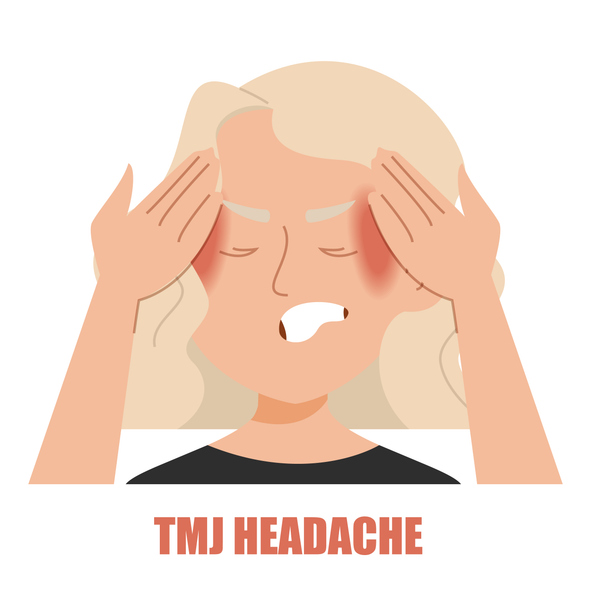
A male patient in his 40s began experiencing discomfort around his right temple approximately three months before visiting my clinic.
He did not have difficulty opening or closing his mouth, and the jaw was not particularly painful at first. However, he gradually began to notice discomfort around the right temporomandibular joint (TMJ).
Over time, the discomfort around the right temple developed into headache-like symptoms extending toward the temporal region. Concerned about the symptoms, he visited a headache clinic and underwent an MRI examination. No significant abnormalities were identified.
He was prescribed aspirin, a nonsteroidal anti-inflammatory drug (NSAID), and Myonal, a muscle relaxant. He continued visiting the clinic every two weeks, but there was no significant improvement in his symptoms.
As the jaw discomfort continued, he also visited a dentist and was provided with a custom-made mouthguard.
Initial Improvement with a Mouthguard
After regularly using the mouthguard, his morning headaches and jaw discomfort improved considerably.
His dentist explained that nighttime clenching could be placing excessive stress on the jaw muscles and potentially contributing to his symptoms, and recommended that he continue wearing the mouthguard at night.
Approximately two months later, his morning symptoms remained improved. However, because he could not wear the mouthguard during the daytime, he continued to experience headaches and jaw discomfort during the day.
Wanting to explore another approach for the symptoms that remained during the daytime, he searched for treatment options and found Spine Chiropractic in Bashamichi.
Because “jaw pain” was listed among the conditions treated at the clinic and it was conveniently located near his home, he decided to visit.
Examination
Interview
The patient reported that his symptoms varied from day to day and occurred approximately two to three times per week on average.
He did not experience pain while eating, but symptoms tended to occur more frequently at night and sometimes developed into headaches.
Pain medication did not provide significant relief. However, the use of the mouthguard had improved his morning headaches and jaw discomfort.
The symptoms were primarily felt from the right temple toward the temporal region.
Visual Inspection
No obvious abnormalities were observed on visual inspection.
Static Palpation
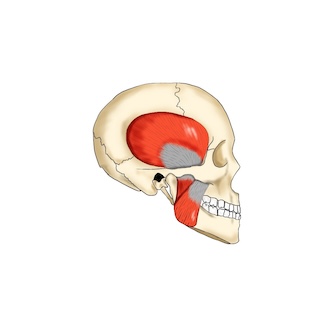
Increased tension was noted in the right masseter muscle.
Compared with the left side, the right temporalis muscle also appeared slightly more tense, with tenderness present on palpation.
Motion Palpation
The movement of the TMJs was assessed during opening and closing of the mouth.
A slight difference in movement timing was observed between the two sides.
- Opening: The right side lagged slightly behind.
- Closing: The right side moved slightly faster.
Orthopedic Tests
There was no specific orthopedic test considered applicable to this presentation.
Muscle Strength Examination
Considering the possible relationship between the symptoms and the cervical region, the sternocleidomastoid (SCM) and surrounding cervical muscles were assessed.
Rather than identifying a clear loss of muscle strength, the examination focused on differences in muscle tension during cervical movement.
Significantly increased tension was noted in the right anterior cervical region.
Initial Treatment Approach
The patient’s primary complaint was headache. However, based on the history and examination findings, I considered that the symptoms could be influenced by a combination of nighttime jaw clenching, tension in the muscles of mastication, TMJ movement, and tension in the cervical region.
The fact that the mouthguard had already improved his morning headaches and jaw discomfort was also an important finding. It suggested that reducing nighttime loading on the jaw may have been beneficial.
However, because symptoms continued during the daytime, reducing nighttime clenching alone did not fully address his remaining symptoms.
For this reason, the treatment approach focused not only on the jaw muscles but also on the movement of the TMJ and the surrounding cervical region.
Treatment included releasing tension in the masseter, temporalis, and other muscles involved in jaw movement.
The TMJ was also assessed and treated while monitoring the opening and closing movement of the jaw.
In addition, the relationship between the jaw, head, and cervical spine was considered. Because the position and movement of the head and cervical spine can influence the muscles and structures surrounding the jaw, the cervical region and cranial structures were also assessed.
During the first session, I kept the treatment relatively gentle in order to assess the patient’s response and avoided high-intensity adjustments.
The initial focus was placed on the jaw-related musculature, TMJ movement, and the relationship between the head and cervical region.
Postural factors were also considered, and a plan was made to gradually address them over subsequent sessions.
As the patient was only available on weekends, he was asked to return one week later.
Treatment Progress
Second Session
The patient did not notice a significant change after the first treatment, but his symptoms had not worsened either.
Based on this response, the treatment approach was expanded to include the relationship between the head and cervical spine.
Cranial and cervical joint movement was assessed, while the opening and closing movement of the TMJ was reassessed.
Treatment also focused on reducing tension in the temporalis muscle.
The patient was asked to return one week later.
Third Session
For the first time in several weeks, the patient reported having days without headaches.
Although the headaches had not completely disappeared, their frequency had noticeably decreased.
As the patient was beginning to respond to treatment, the same general approach was continued.
Fourth Session
One week later, the patient reported a further reduction in headache frequency.
He occasionally still experienced mild discomfort, but both the frequency and duration of the symptoms had decreased.
Because his condition had become more stable, the treatment interval was extended to two weeks.
Fifth Session
After two weeks, the patient reported that his symptoms had increased slightly during the second week.
At this point, the treatment approach was expanded beyond the jaw and cervical region.
The upper back and lower back were also assessed, with greater attention given to overall posture and movement patterns.
Sixth Session
After incorporating postural and whole-body approaches, the patient was able to maintain his improvement over a two-week treatment interval.
After two weeks, his pain level remained below half of the initial level.
At this point, the intensive treatment phase was completed.
Maintenance Care
The patient then transitioned to maintenance care, with treatment approximately every three to four weeks.
It has now been two years since his initial visit, and he continues to receive regular care at Spine Chiropractic in Bashamichi.
This patient had previously received care at my former clinic and continued treatment after I opened Spine Chiropractic in Bashamichi.
[Practitioner’s Opinion]
This case involved both jaw discomfort and headache symptoms, with findings involving the TMJ, muscles of mastication, and cervical region.
One important aspect of this case was the response to the mouthguard.
The mouthguard significantly improved the patient’s morning headaches and jaw discomfort, suggesting that nighttime clenching or loading of the jaw may have contributed to at least part of his symptoms.
However, the symptoms did not completely disappear during the daytime.
For this reason, I considered it important to look beyond nighttime clenching and assess the TMJ movement, muscles of mastication, cervical region, and posture.
From a chiropractic perspective, the purpose of treatment was not simply to relax tight muscles.
The TMJ was assessed for movement, the masseter and temporalis were examined for tension and tenderness, and the cervical region was assessed for asymmetry and restricted movement.
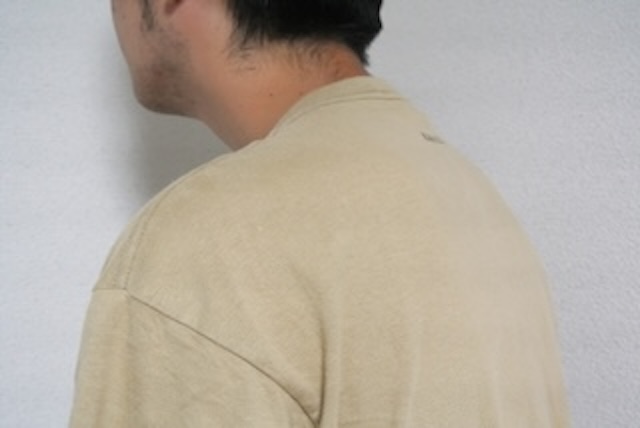
In this case, the right masseter and temporalis were more tense, there was a subtle difference in TMJ movement timing, and increased tension was present in the right anterior cervical region.
These findings led us to address the jaw and cervical region together rather than treating the headache as an isolated symptom.
The relationship between the jaw and the cervical region is also important from a functional perspective. Changes in head and neck posture can influence the muscles surrounding the jaw, while tension and altered movement around the jaw can also affect the surrounding head and neck musculature.
As treatment progressed, the focus was gradually expanded from the jaw and cervical region to the upper back, lower back, and overall posture.
Work-related stress and the patient’s working environment were also considered potential contributing factors. Lifestyle changes aimed at reducing stress and improving recovery were therefore recommended alongside treatment.
The patient actively worked on these lifestyle changes, and he later changed jobs, resulting in a less stressful working environment. This may also have contributed to the long-term stability of his symptoms.
Mouthguard and Chiropractic Care Can Have Different Roles
This case also illustrates that a mouthguard and chiropractic care do not necessarily have to be viewed as competing approaches.
A mouthguard can help reduce nighttime loading on the teeth and jaw associated with clenching or grinding.
Chiropractic care, on the other hand, can assess and address factors that may remain during the daytime, such as TMJ movement, tension in the muscles of mastication, cervical function, and postural factors.
In this case, the improvement was not attributed to a single intervention.
The combination of reducing nighttime jaw loading with the mouthguard, addressing the TMJ and surrounding musculature, working on the cervical region and posture, and making changes to the patient’s lifestyle may all have contributed to the improvement and long-term stability of his symptoms.
This case demonstrates the importance of considering multiple contributing factors when treating patients with coexisting jaw discomfort and headache symptoms.
At Spine Chiropractic, I address a wide range of musculoskeletal conditions directly impacting daily life, not merely as a form of relaxation therapy. Conveniently located within a one-minute walk from Bashamichi Station, an eight-minute walk from Nihon-Odori Station, a seven-minute walk from JR Kannai Station, and a 12-minute walk from JR Sakuragicho Station, my clinic is well-suited for residents and workers in the Yokohama area.
If you are experiencing similar symptoms, please feel free to visit Spine Chiropractic. I am committed to providing care with sincerity and professionalism.